Browse

Log in / Register
 Share

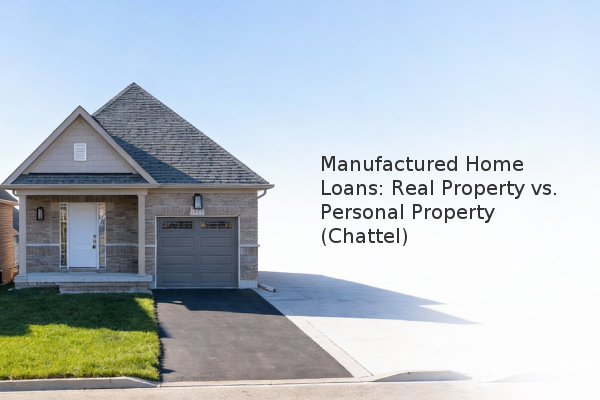
For many aspiring homeowners, a manufactured home presents a viable path to ownership. However, the long-term financial outcome hinges on a critical distinction: whether the home is classified as real property or personal property (chattel). This classification dictates the loan type, interest rate, consumer protections, and, most importantly, the home's potential for appreciation. Understanding this difference is the key to ensuring your manufactured home becomes a wealth-building asset, not a depreciating liability.
The classification is determined by how the home is titled. If the manufactured home and the land it sits on are titled together, it is considered real property. This makes it eligible for traditional mortgage products. If the home is titled separately from the land, it is classified as personal property, or chattel, which leads to a different financing system.
This single line on the title affects nearly every aspect of the purchase:
When a manufactured home is classified as real property, the financing process mirrors that of a site-built home. According to Derek Watkins, a retail sales manager at Planet Home Lending, “As long as the home is going on a permanent foundation, you can use a traditional mortgage, like an FHA, VA, USDA, Fannie Mae, or Freddie Mac.”
Research from the Urban Institute (2022) indicates that about 58% of manufactured home loans were structured this way. Borrowers in this category secured median loan amounts of roughly $175,000. The core advantage is a combination of longer loan terms, lower interest rates, and federal safeguards, creating a stable path to building equity. The data confirms this payoff: over the last 24 years, manufactured homes classified as real property have appreciated 211.8%—nearly identical to the appreciation of site-built homes.
Financing a manufactured home as personal property involves a chattel loan. These loans fall under the Uniform Commercial Code (UCC) and are viewed as riskier by lenders because the structure itself, not the land, serves as collateral. This risk translates into tangible costs for the borrower.
Based on our experience assessment, the financial differences are significant:
Furthermore, because chattel loans typically finance only the structure, borrowers do not benefit from land appreciation, which is a primary driver of home equity. If the home is on leased land, rising lot rents can also erode resale value. An analysis by the Eviction Lab of over 60,000 filings in Florida found that mobile home owners faced an annual eviction rate of 1.5%—triple the foreclosure rate for traditional homeowners.
With careful preparation, buyers can expand their options and potentially qualify for better loan products.
Taking time to understand these distinctions can mean the difference between a loan that drains wealth and one that builds it. By aiming for real property status, buyers can access the stability and appreciation potential of traditional homeownership, turning a manufactured home into a sound long-term investment.