Browse

Log in / Register
 Share

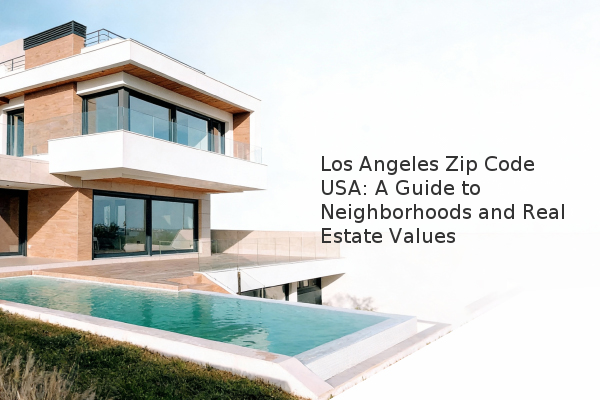
Understanding the ZIP Code system in Los Angeles is crucial for navigating its diverse real estate market. This guide provides an objective overview of how Los Angeles ZIP codes correlate with neighborhoods, property types, and market values, offering a data-driven foundation for your research. The core conclusion is that ZIP code boundaries often define distinct micro-markets with significant price variations, making them a primary filter for home buyers and investors.
A ZIP Code (Zone Improvement Plan code) is a system used by the United States Postal Service (USPS) to efficiently route mail. In a vast metropolitan area like Los Angeles, these codes do more than just organize mail delivery; they often align with neighborhood boundaries and community identities. For real estate purposes, analyzing data by ZIP code provides a more granular view of the market than looking at the city as a whole. It's important to note that while ZIP codes and neighborhoods often overlap, they are not always perfectly synonymous, as some neighborhoods may span multiple codes.
The value of real estate in Los Angeles is intensely localized. Proximity to the ocean, school district quality, and historical housing stock are key factors that create dramatic price differences between adjacent ZIP codes. For instance, a single-family home in a coastal code like 90210 (Beverly Hills) commands a premium compared to a similar-sized property in an inland area. The table below illustrates the approximate median home sale price ranges in select, representative Los Angeles ZIP codes based on recent market data. These figures are for illustrative purposes and fluctuate constantly.
| Los Angeles ZIP Code | Representative Area | Approximate Median Home Sale Price Range |
|---|---|---|
| 90210 | Beverly Hills | $3,500,000+ |
| 90402 | Santa Monica | $2,200,000 - $4,000,000 |
| 90049 | Brentwood | $1,800,000 - $3,000,000 |
| 90026 | Silver Lake | $1,200,000 - $1,800,000 |
| 90019 | Mid-Wilshire | $900,000 - $1,500,000 |
| 90011 | Central LA | $600,000 - $900,000 |
When searching for a property, using the ZIP code filter on real estate portals is an effective first step. However, a savvy searcher will dig deeper. A single ZIP code can contain a mix of single-family homes, condominiums (individually owned units within a larger building complex), and multi-unit buildings. It is essential to research specific factors within your target ZIP code, such as the property tax rate (a percentage of the property's assessed value paid annually to local government) and any additional Mello-Roos taxes, which are special assessments for community infrastructure in newer developments.
While a ZIP code provides valuable macro-level data, it should not be the sole deciding factor. Within any given code, there can be variations in street-by-street desirability, noise levels, and access to amenities. Always visit a neighborhood at different times of the day and week. Furthermore, school district boundaries do not always align with ZIP codes, which is a critical consideration for families. Verifying school assignments directly with the local school district is a necessary step.
Utilize ZIP codes as a powerful initial sorting tool, but complement this data with on-the-ground research and analysis of hyper-local factors to make a fully informed real estate decision in the complex Los Angeles market.