Browse

Log in / Register
 Share
Share
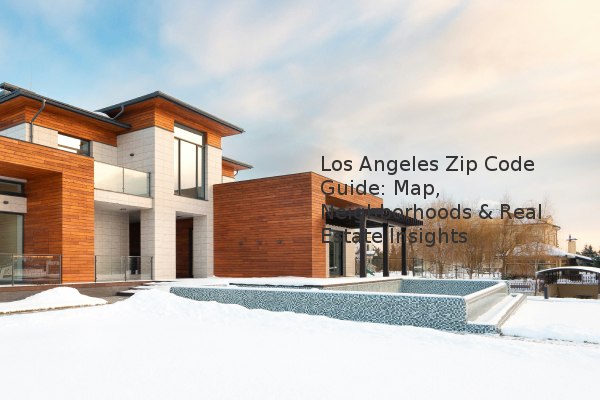
Understanding Los Angeles zip codes is fundamental for navigating the city's vast and varied real estate landscape. A ZIP Code, an acronym for Zone Improvement Plan, is a postal code system used by the United States Postal Service (USPS) to efficiently route mail. In a market as diverse as LA, zip codes are more than just mailing labels; they are powerful indicators of neighborhood character, school districts, property values, and market trends. This guide provides a clear map of key Los Angeles zip codes and their direct impact on your real estate decisions.
Why Do Los Angeles Zip Codes Matter in Real Estate?
Zip codes in Los Angeles serve as primary identifiers that correlate strongly with market dynamics. They directly influence property tax assessments, as tax rates can vary between incorporated areas. Furthermore, zip codes are often linked to specific school districts, which is a critical factor for family homebuyers and can significantly affect property values. From a data perspective, real estate listings and market analyses are frequently organized by zip code, allowing for precise comparisons of median sale prices, price-per-square-foot trends, and inventory levels. For example, the market conditions in 90049 (Brentwood) can be vastly different from those in 90011 (Central LA), highlighting the necessity of zip-code-level research.
| Los Angeles Zip Code | Representative Neighborhood(s) | Key Characteristic |
|---|---|---|
| 90210 | Beverly Hills | Luxury retail, iconic residential streets |
| 90049 | Brentwood | Upscale, suburban feel, top-rated schools |
| 90026 | Silver Lake | Trendy, artistic, competitive housing market |
| 90065 | Cypress Park / Glassell Park | Rapidly evolving, mix of historic and modern homes |
| 90402 | Santa Monica (North of Montana) | Coastal, high-demand, premium prices |
A Breakdown of Key LA Zip Codes and Their Markets
The Los Angeles basin can be broadly categorized by region, each with its own zip code clusters and real estate personality. Westside zip codes like 90024 (Westwood), 90025 (West LA), and 90403 (Santa Monica) are known for their proximity to tech hubs and the coast, commanding premium prices. Central areas, including 90036 (Mid-Wilshire) and 90048 (Beverly Grove), offer a more urban lifestyle with condos and newer developments. In the San Fernando Valley, zip codes such as 91403 (Sherman Oaks) and 91316 (Encino) provide more space for the money, attracting buyers seeking single-family homes.
How to Use Zip Code Data in Your Home Search
When beginning your search, use zip codes as a filtering tool on real estate platforms to narrow down listings that match your desired location and budget. Analyze market reports specific to your targeted zip codes to understand if it is a buyer's or seller's market. Look at the median days on market to gauge demand. It is also crucial to look beyond the numbers; visit the neighborhoods at different times of the day to assess commute traffic, noise levels, and overall ambiance. A zip code gives you the data, but a personal visit provides the context.
Beyond the Zip Code: Understanding Neighborhood Boundaries
While zip codes are essential for data aggregation, it is important to remember that their boundaries do not always align perfectly with recognized neighborhood lines. A single zip code may contain parts of several distinct communities. Therefore, use the zip code as a starting point for your research, but dig deeper into the specific neighborhood or even the block you are considering. Consulting with a local real estate expert can provide clarity on these subtle yet important distinctions.
Key Takeaways for Your LA Real Estate Journey