Browse

Log in / Register
 Share
Share
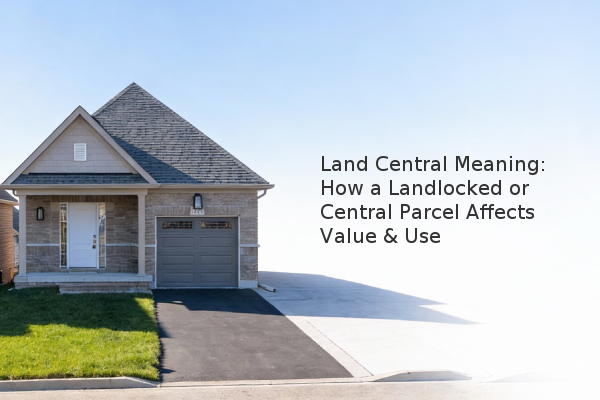
A land central property, often referring to a landlocked parcel with no direct public road access or a centrally-located lot within a development, carries significant implications for its value, usability, and marketability. The core takeaway is that landlocked parcels typically have a lower market value due to access challenges, while a centrally-lotted piece of land in a planned community may offer unique advantages. Understanding the legal and practical distinctions is critical for any potential buyer or seller.
What Defines a Land Central or Landlocked Property?
A landlocked parcel is a tract of land that has no legal, direct access to a public road. The term "land central" is not a formal legal term but is often used in real estate to describe such an inaccessible property or, alternatively, a lot situated in the center of a larger tract. The key issue is ingress and egress—the right to enter and exit the property. Without a deeded easement, which is a legal right to use another person's land for a specific purpose, the owner of a landlocked parcel may have no way to legally reach their own land. This severely limits development potential and can render the property nearly unusable.
How Does a Landlocked Status Impact Property Value and Use?
The impact on value is almost always negative. Lenders are often hesitant to provide mortgage financing for a landlocked property due to the high risk and lack of utility, which drastically shrinks the pool of potential buyers. The owner faces major hurdles:
The following table illustrates common scenarios and their typical impact on property value:
| Scenario | Description | Typical Impact on Value |
|---|---|---|
| No Legal Access | No recorded easement exists. | Severe decrease (50% or more); very difficult to finance. |
| Unpaved Easement | A legal easement exists but is unpaved or unmaintained. | Moderate decrease; value depends on easement quality. |
| Central Lot in Subdivision | Lot is surrounded by other owned lots with direct road frontage. | Neutral or positive; may offer more privacy. |
| Landlocked with Lease | Access is granted via a revocable lease or license. | Significant decrease; access is not permanently guaranteed. |
Securing Legal Access: Easements and Quiet Title Actions
If you own or are considering purchasing a landlocked property, securing legal access is the paramount first step. The most common method is negotiating a private easement with an adjoining landowner. This involves drafting a formal agreement that grants the right of access, which is then recorded with the property's deed—the legal document that transfers ownership. If a neighbor is unwilling to negotiate, you may need to pursue a quiet title action or seek an easement by necessity through the courts, which can be a lengthy and costly legal process. Success is not guaranteed and hinges on specific state laws.
Key Considerations Before Buying a Land Central Parcel
Conducting extreme due diligence is non-negotiable. Before any purchase, you must:
Conclusion: Weighing the Risks and Opportunities
While a landlocked property often presents substantial risks, it can sometimes be purchased at a price low enough to justify the cost and effort of securing access. The process, however, is fraught with legal and financial uncertainty. Prospective buyers must prioritize verifying legal access through a title report and survey. For sellers, full transparency about access issues is legally required and critical to avoid future disputes. Ultimately, the most significant factor is securing a permanent, recorded easement to ensure the property's long-term value and utility.