Browse

Log in / Register
 Share
Share
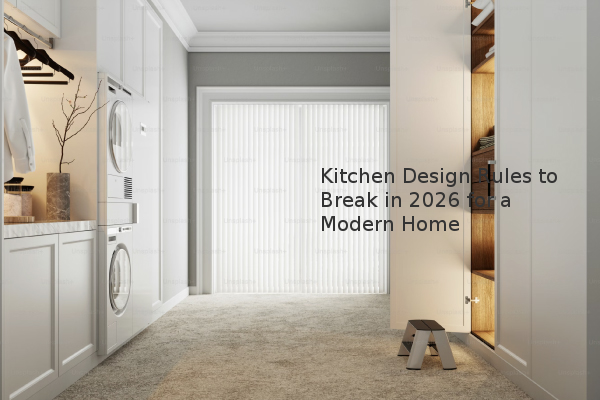
In 2026, breaking traditional kitchen design rules is a strategic way to enhance your home's aesthetic appeal and functionality, ultimately increasing its value. Based on our experience assessment, moving away from bulky upper cabinets, stationary islands, all-white color schemes, and perfectly matched finishes can create a more personalized and luxurious space. This approach is particularly effective for homeowners considering a sale, as a modern, well-designed kitchen is a significant factor for potential buyers.
Why should you consider breaking kitchen design rules in 2026? Modern home design in 2026 prioritizes personalization, flexibility, and bold aesthetics. Adhering to outdated formulas can result in a kitchen that feels generic and lacks the character that today's market appreciates. A kitchen remodel is one of the top home improvements for return on investment (ROI), and innovative design choices can set your property apart. The goal is to create a space that is not only beautiful but also uniquely tailored to your lifestyle, which is a compelling selling point.
What are the alternatives to bulky upper cabinets? The conventional approach to kitchen storage heavily relies on upper-wall cabinets. However, eliminating them can dramatically open up the space. As an alternative, you can maximize storage in base cabinets or a large kitchen island, making items more accessible. This design choice frees up wall space for a striking full-slab backsplash that extends to the ceiling or for displaying art. This creates a sense of height and airiness, making even a smaller kitchen feel more expansive. The key is strategic planning to ensure sufficient storage is maintained elsewhere.
Is a stationary kitchen island necessary? The belief that a kitchen island must be a fixed, cabinet-heavy structure is outdated. For smaller kitchens or those requiring multifunctional spaces, a mobile island is a superior solution. Equipped with lockable casters, a mobile island offers unparalleled flexibility. It can function as a food prep station, a casual dining area, or a homework hub, and be moved as needed. To ensure durability, surface these islands with robust materials like Silestone or Dekton, which are engineered quartz and sintered stone surfaces known for high resistance to scratches, stains, and heat.
Should you avoid dark colors in the kitchen? While white kitchens remain popular for their bright and clean appearance, 2026 sees a strong trend towards darker, moodier palettes. Embracing colors like deep navy, charcoal, or forest green for cabinetry, countertops, or appliances can introduce a sense of luxury and sophistication. High-gloss materials for dark countertops can reflect light, preventing the space from feeling too enclosed. A contrasting scheme, such as black cabinetry with white countertops, offers a dynamic and modern look that breaks the monotony of an all-white kitchen.
Do all kitchen finishes need to match perfectly? The traditional rule of matching every metal finish—from faucets to cabinet hardware to light fixtures—is no longer mandatory. In fact, mixing finishes can add depth and visual interest to your kitchen design. The contemporary approach is to choose a dominant finish and then incorporate one or two accents. For example, you might select brushed nickel as the primary finish for faucets and hardware, and then introduce matte black accents in your lighting fixtures. The key to success is ensuring the finishes share a common undertone (e.g., warm or cool) to create a cohesive look.
Implementing these design changes requires careful planning. Before removing upper cabinets, assess your storage needs in base cabinets and islands. When selecting a mobile island, prioritize stability and durable surfacing. For color schemes, sample paints and materials in your actual kitchen's lighting before committing. Bold design choices can significantly increase your home's marketability, but they must be executed with precision. Based on our experience assessment, a kitchen that balances innovation with functionality is a powerful asset in the 2026 real estate market.