
Browse

Log in / Register
 Share
Share
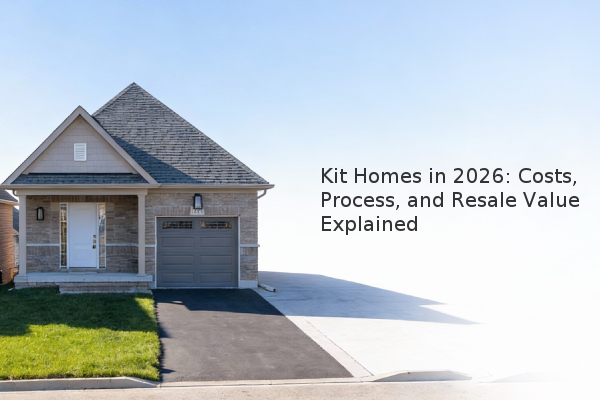
For budget-conscious buyers in 2026, a kit home—a dwelling sold as a pre-cut package of materials for assembly—can be a viable path to homeownership, but it requires significant DIY skill or the budget to hire professionals. While base kit prices can start as low as $7,500, the total project cost often surpasses $100,000 when factoring in land, foundation, utilities, and labor. Based on our experience assessment, these homes can be a smart investment in historical neighborhoods but may face a value discount in other markets.
A kit home is a type of dwelling where all the necessary building materials are pre-cut and packaged with instructions for on-site assembly. Historically sold through catalogs by companies like Sears, modern kit homes are now available online through retailers like Amazon. The process involves purchasing the kit, securing a building plot, preparing a foundation, and then assembling the structure, which can range from a small cabin to a two-story house. It is critical to understand that the kit price rarely includes land, a foundation, plumbing, electrical systems, or permits, which are the buyer's responsibility.
The appeal lies in the potential for significant cost savings on the structure itself. For example, a 1,100-square-foot model might cost around $44,000 for the materials. However, this is just the beginning of the financial commitment. Buyers must budget for all the additional site work and professional help needed to make the structure habitable.
The advertised price of a kit home is often a fraction of the total project cost. A buyer should expect to pay for:
One buyer, Rob Jenewein, reported a total cost of just over $100,000 for his cabin after accounting for the kit, a builder's help, foundation, and utilities. This demonstrates that the final cost is typically two to three times the kit's sticker price.
The resale value of a kit home is not guaranteed and is highly dependent on the local market perception. In some areas, particularly those with a sense of history, older kit homes from companies like Sears can carry a historic cachet and even a sales premium. Real estate agent Catarina Bannier notes that in wealthier communities, buyers may be enthusiastic, leading to sales well over asking price.
However, in other markets, some buyers may view kit homes as inferior to traditional site-built ("stick-built") homes. In these lower-priced areas, kit homes can sometimes sell at a discount. The key to maximizing resale value is the quality of construction and the home's integration into a desirable neighborhood.
The primary challenge is the sheer complexity of the undertaking. While companies market certain models as being like "building a Lego house," larger projects require professional skill. Key hurdles include:
As author Rosemary Thornton cautions, "We're not building homes on the prairie anymore." Modern expectations for central air conditioning, advanced electrical systems, and complex plumbing mean that building a comfortable, code-compliant home is a major undertaking.
For those considering a kit home in 2026, thorough planning is non-negotiable. Start by getting detailed quotes from local contractors for site work and assembly before purchasing the kit to understand the true total cost. Secure financing and have all permits in place before the kit is delivered. Finally, be realistic about your skills; for any structure over a basic cabin, hiring a professional crew is a predictable way to ensure the project's success and your long-term satisfaction. While not for everyone, a kit home can be a rewarding path to a custom, affordable property for the well-prepared buyer.


