Browse

Log in / Register
 Share

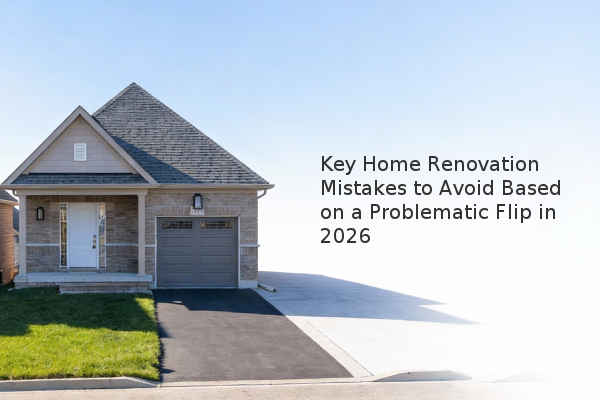
Investing $150,000 in renovations does not guarantee a profitable sale, especially when critical, unseen issues like a failing septic system are overlooked. This hard lesson, drawn from a recent real estate case in Bothell, WA, underscores the non-negotiable importance of a thorough pre-purchase inspection. For homeowners and investors, avoiding costly mistakes means prioritizing foundational systems over cosmetic upgrades to protect your investment.
What are the most critical exterior repairs for curb appeal? The first impression of a home is its exterior, making certain repairs essential for attracting buyers. Based on our experience assessment, a damaged roof and outdated siding are immediate red flags that can deter potential offers. In the Washington case, professionals prioritized replacing the roof and fascia board and updating the siding, as these are high-impact items buyers notice first. A fresh coat of paint, including an accent color on the front door, significantly enhanced the property's curb appeal. These exterior improvements are often considered worthwhile investments because they directly influence a buyer's initial perception.
Should you always remove walls to create an open floor plan? While open-concept layouts are popular, removing walls is not always the most cost-effective strategy. Structural walls can be expensive to demolish and may require engineering assessments. A viable alternative is to refresh an existing wall. For example, the team used a technique called German schmear (a mortar application that whitewashes brick or stone to create a light, worn look) to modernize a dated brick wall without removing it. This approach preserved the home's structure, saved on demolition and reconstruction costs, and successfully achieved the desired European country aesthetic, proving that a full tear-down isn't always necessary.
Is a double vanity essential in a bathroom remodel? Storage and functionality often outweigh the need for multiple sinks, particularly in guest bathrooms. In the project home, the designers encountered a bathroom with a single pedestal sink (a freestanding sink with no storage cabinet) that lacked practicality. They replaced it with a vanity featuring a single sink and storage underneath. This decision prioritized useful storage over a second sink, which can make a smaller space feel cramped. For most buyers, ample storage is a more valuable feature than a double vanity in a secondary bathroom.
How can you highlight a home’s best architectural features? Drawing attention to positive attributes, like high ceilings, can increase the perceived value of a home. A simple yet effective technique is to use color strategically. By painting the upper portion of a wall in a room with vaulted ceilings, the designers guided the eye upward, emphasizing the spaciousness and natural light from skylights. This low-cost tactic helps showcase a property's unique selling points without a major investment, making certain rooms feel more grand and inviting.
Why do closet systems matter in higher-priced homes? At higher price points, buyers expect upgraded amenities and organized storage solutions. In a primary bedroom, standard closets were transformed with built-in closet systems (customizable organizational units for shelves, rods, and drawers). This upgrade signals a level of luxury and convenience that buyers seeking a home near the $1,000,000 mark actively look for. It turns a basic functional space into a premium feature that can help a property stand out in a competitive market.
What is the biggest potential pitfall in a renovation project? The most significant risk is overlooking major structural or system defects. Despite a successful $150,000 cosmetic renovation, the project was halted by an unforeseen issue: a failing septic system (an on-site wastewater treatment system common in areas without municipal sewer lines). The necessary repair to connect to the city sewer was estimated at $80,000, rendering the beautiful home uninhabitable and unsellable without the fix. This scenario highlights that the most expensive problems are often those you cannot see.
The essential takeaway is to always invest in professional inspections for plumbing, septic, electrical, and structural integrity before committing to a purchase or a major renovation. While aesthetic updates are important for saleability, they are worthless if the fundamental systems of the house are compromised. A detailed inspection report can prevent catastrophic financial losses and ensure your renovation budget is spent effectively.