Browse

Log in / Register
 Share
Share
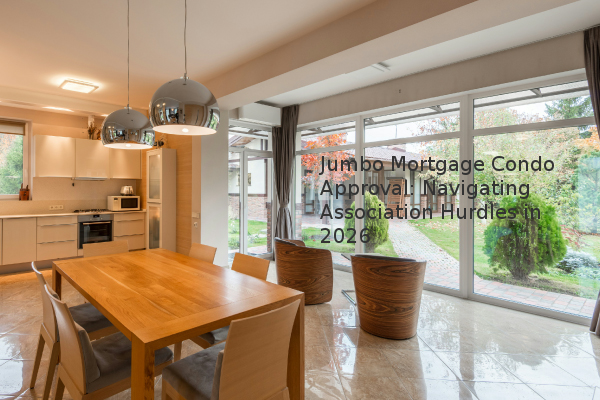
Securing a jumbo mortgage for a condominium is significantly more complex than for a single-family home because the lender must approve not just the borrower, but also the condominium association itself. The financial health and governance of the association directly impact loan approval, as issues like insufficient reserve funds, high investor ownership concentration, or pending litigation can derail a deal. Based on our experience assessment, understanding these lender requirements upfront is critical for a successful purchase in 2026.
Why Are Lenders Stricter with Condo Mortgages?
When you purchase a condominium, you are buying your individual unit plus a shared ownership interest in the common areas—such as lobbies, grounds, and amenities like pools or gyms. These areas are managed by a condominium association, an organization run by elected residents. Because you aren't solely responsible for maintaining the property's overall value, lenders perform a rigorous review of the association. They need to ensure that the collective financial management is sound, as problems with the association can jeopardize your investment and their collateral. The lender's primary concern is that a poorly managed association could lead to special assessments or decreased property values, increasing the risk of loan default.
What Financial Red Flags Do Lenders Look For in a Condo Association?
Lenders scrutinize the condo association's budget and reserves to gauge its financial stability. A major red flag is insufficient reserve funds. Reserves are savings set aside for major future repairs, like a new roof or elevator modernization. Lenders typically want to see reserves equal to at least 10% of the association's annual budget. If reserves are too low, the association may be forced to issue a special assessment—a large, one-time fee charged to all owners—to cover an unexpected cost. This sudden financial burden could strain your ability to make your mortgage payments.
Another critical concern is high investor concentration. Lenders are wary if a single entity owns more than 10% of the units in a development. If that investor encounters financial trouble, defaults on their dues, or sells multiple units quickly at discounted prices, it could cripple the association's budget and depress property values for the entire building. Lenders obtain this financial profile by having the buyer pay for a condo questionnaire, a document completed by the association that typically costs between $100 and $300.
How Does Pending Litigation or Commercial Use Affect Approval?
Lenders will investigate any significant pending lawsuits against the condo association. Minor litigation, such as a dispute over a rule violation, may be overlooked. However, major lawsuits involving structural defects or construction flaws pose a substantial risk. A costly legal loss could lead to massive special assessments for all unit owners, making lenders likely to decline financing.
Furthermore, jumbo lenders often adhere to guidelines similar to those from Fannie Mae, which state that no more than 24% of the total property square footage should be dedicated to commercial use (e.g., ground-floor retail spaces). A higher percentage of commercial space is seen as a riskier investment, potentially making the building ineligible for certain types of financing.
What Should a Condo Buyer Do to Improve Their Chances?
Proactive research is your best strategy. Before making an offer, request the association's most recent financial documents, including the budget, reserve study, and meeting minutes. Some well-managed developments provide this documentation upfront. If the building is already on a lender's "approved" list, the financing process can be much smoother. You may also need to be prepared to shop around with different lenders, as some may have more flexible criteria for condos than others.
To navigate a jumbo condo purchase successfully: