Browse

Log in / Register
 Share
Share
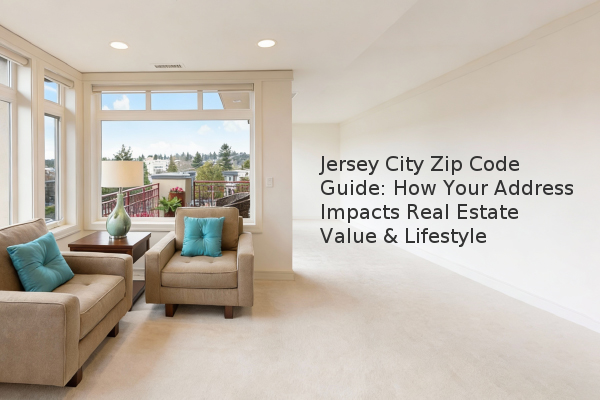
Your Jersey City zip code is more than just a mailing address; it is a primary determinant of your property's value, property taxes, lifestyle amenities, and even future resale potential. This guide analyzes the key characteristics of Jersey City's zip codes—07302, 07304, 07305, 07306, 07307, and 07310—to provide a clear, data-driven overview for prospective buyers and renters. Understanding the nuances between these areas is crucial for making an informed real estate decision that aligns with your financial and personal goals.
Jersey City's real estate market is highly localized, with prices and community vibes shifting from one neighborhood to the next. By focusing on objective factors like school district ratings, public transportation access, and recent sales data, you can navigate the city's diverse offerings with confidence.
Each of Jersey City's six zip codes corresponds to distinct neighborhoods with unique profiles. Property Tax rates, which are the annual taxes levied on real estate by local governments, can also vary subtly based on municipal assessments within these areas. For a quick comparison, consider the following data based on recent market analyses:
| Zip Code | Primary Neighborhoods | Average Home Value (Est.) | Key Characteristics |
|---|---|---|---|
| 07302 | Downtown, Hamilton Park | High $700,000s | Waterfront high-rises, historic brownstones, PATH access to NYC. |
| 07304 | The Heights | Mid $500,000s | More affordable, family-oriented, views of Manhattan. |
| 07305 | Greenville | Low $400,000s | Predominantly single-family homes, undergoing development. |
| 07306 | Journal Square, McGinley Square | Mid $500,000s | Major transportation hub, diverse community, rapid growth. |
| 07307 | West Side, Bergen-Lafayette | Low $500,000s | Mix of historic homes and new constructions, artistic vibe. |
| 07310 | Country Village, Port Liberté | High $600,000s | Gated communities, suburban feel, near Liberty State Park. |
This table illustrates the broad spectrum of housing options. A condo in 07302 offers unparalleled urban convenience, while a single-family home in 07310 provides a quieter, more private setting. Your choice will significantly impact your daily commute, budget, and living experience.
The value of your home is intrinsically linked to its location. Zip codes with superior amenities, such as proximity to mass transit like the PATH train, top-rated schools, and parks, consistently command higher prices. For example, properties in 07302 (Downtown) benefit from direct access to Manhattan, leading to premium valuations. Conversely, areas further from transit hubs, like parts of 07305, offer more accessible entry points into the market.
Property taxes are a critical ongoing cost for homeowners. While Jersey City has a single municipal tax rate, the assessed value of your property—which is influenced by its zip code and neighborhood—directly determines your tax bill. A home assessed at $800,000 will have a considerably higher annual tax obligation than one assessed at $500,000. It is essential to factor this long-term expense into your home-buying budget.
Your decision should be based on a balanced assessment of lifestyle preferences and financial practicality. For professionals working in New York City, prioritizing zip codes 07302 or 07306 might be paramount due to their exceptional PATH train access, reducing commute time significantly. Families might prioritize areas within specific school districts or those with more green space, making 07304 or 07310 more appealing.
Renters should also be aware of these geographic price differentiations. Rental prices per square foot can vary dramatically between a high-rise in 07302 and a walk-up apartment in 07304. Furthermore, consider future development plans; areas like Journal Square (07306) are experiencing significant new construction, which can influence both the quality of life and long-term property values.
To make the most strategic choice, define your non-negotiable needs first, then use zip code data to narrow your search effectively. Visiting neighborhoods at different times of the day and week will provide the best sense of the community atmosphere.