Browse

Log in / Register
 Share
Share
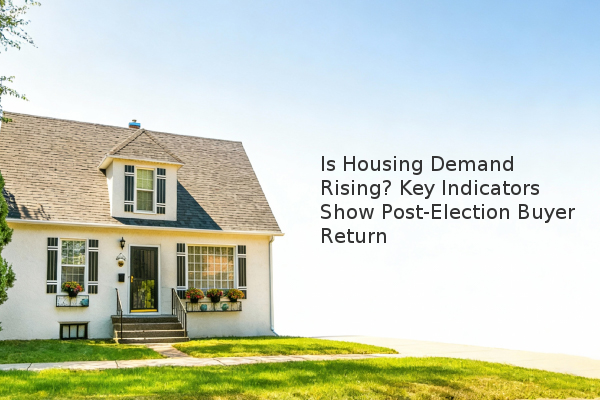
Early-stage homebuying demand has surged, with key metrics jumping to their highest levels in over a year. According to recent data, this increase is largely driven by buyers who paused their searches during the presidential election uncertainty. The Federal Reserve's consecutive interest rate cuts have also prompted action, even though mortgage rates remain elevated and housing payments are near record highs. This suggests a release of pent-up demand rather than a fundamental market shift.
Two primary indicators show a significant uptick in buyer activity immediately following the election. The Homebuyer Demand Index, which measures requests for home tours and other buying services from real estate agents, jumped more than 15% in early November to its highest point in nearly a year and a half. Concurrently, data from Optimal Blue shows that mortgage-rate locks for home purchases more than doubled from a month earlier as of November 12. A mortgage-rate lock is a lender's guarantee of a specific interest rate for a set period, and a surge indicates more buyers are moving from browsing to actively securing financing.
The return of buyers appears to be a direct response to reduced political and economic uncertainty. A survey conducted in October revealed that nearly one-quarter of prospective first-time buyers were intentionally waiting until after the election. With that event passed and the Fed cutting rates for the second consecutive month, a segment of buyers felt they had run out of reasons to delay. As Chen Zhao, an economic research lead, noted, buyers are acting because "we don’t expect rates to fall significantly anytime soon." This mindset is pushing those who were on the fence to re-enter the market.
It's important to distinguish between leading and lagging indicators. Early-stage activity like the Demand Index is a leading indicator, signaling future market movements. Pending home sales, which are homes under contract but not yet closed, are a lagging indicator. For the four weeks ending November 10, pending sales were up 4.7% year-over-year, consistent with recent trends. The recent jump in early-stage demand suggests that pending sales figures are likely to show improvement in the coming weeks, barring a sudden reversal.
While buyer activity increased, the supply side of the market showed a notable change. New listings of homes for sale were unchanged from a year earlier, marking the first time in a year that listing activity did not increase. This continues a trend of stagnating seller activity, with new listings increasing by less than 1% for three of the prior four weeks. This ongoing imbalance between returning demand and limited new supply continues to put upward pressure on home prices.
Based on our experience assessment, the current market climate presents specific considerations for buyers and sellers: