Browse

Log in / Register
 Share

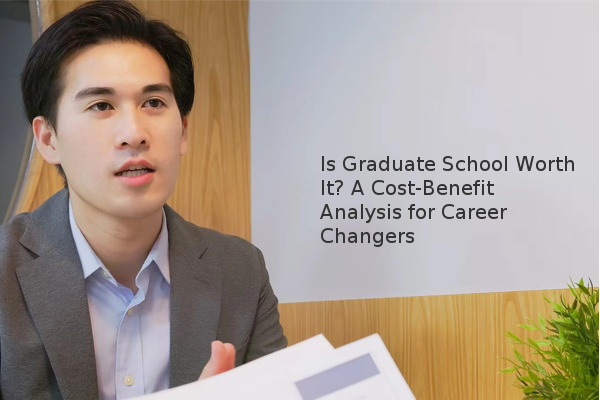
Deciding whether graduate school is a worthwhile investment hinges on a clear-eyed analysis of its potential return on investment (ROI), including career advancement, salary increases, and the significant costs of tuition and lost income. For many professionals, an advanced degree can be a powerful catalyst, but it's not a guaranteed ticket to a higher salary. Before enrolling, you must validate the career outcomes, understand the financial commitment, and ensure your motivations align with realistic goals.
The first step is to conduct a rigorous self-assessment. Are you seeking a mandatory credential for advancement in your current field, or are you attempting a complete career pivot? Both are valid reasons, but each requires different research. Career counselor Jane Finkle emphasizes, "One of the most important factors is, where is this going to get you?" Thoroughly investigating the employment opportunities for graduates of your specific program is non-negotiable.
For some, like Erin Doland, the motivation is a fundamental career change. "The more I sat behind a desk all day, the more I realized changing employers wasn't going to make me happy," she says, explaining her decision to leave a nonprofit communications role for a master's in education. It's also critical to dismiss outdated preconceptions. Based on assessment experience, individuals at any career stage can successfully pivot; age should not be a deterrent if the plan is sound.
A common pitfall is pursuing a degree without a clear understanding of what it qualifies you to do. Avoid the mistake of one unnamed MBA student who, when asked what new job titles her degree would unlock, replied, "I'm not completely sure." You must be certain of the jobs your graduate degree will qualify you for and the actual placement rates of the programs you are considering.
To gather this intelligence, go beyond the admissions brochure. Ask for the program's official career outcomes survey. Sit in on classes and speak with current students—not just the ones handpicked by the admissions office. Your most critical reality check: conduct informational interviews with potential future employers. Ask them directly if the degree is a requirement, a preference, or irrelevant for the roles you want. This due diligence provides an objective view of the degree's market value.
| Research Action | Key Question to Answer |
|---|---|
| Review Career Outcomes Data | What percentage of graduates land jobs in their desired field, and what are the average starting salaries? |
| Conduct Informational Interviews | Do hiring managers in my target industry truly value this specific degree from this university? |
| Analyze Job Descriptions | Are the skills and credentials taught in this program frequently listed as requirements for my target roles? |
Once you've established sound reasons for attending, you must confront the financial reality: the triple impact of lost income, tuition fees, and future student loan payments. Can your financial situation withstand this hit? For recent graduates like Doland, scaling back to a "student lifestyle" for two years may be feasible. However, for a mid-career professional accustomed to a higher disposable income, the adjustment can be more severe.
If the financial downsizing is a significant barrier, explore alternatives. Investigate part-time programs that allow you to maintain your income. Critically, determine if your current employer offers tuition reimbursement, which can dramatically reduce the out-of-pocket cost. Some companies may require a commitment to stay for a certain period after graduation, but this can be a worthwhile trade-off for funded education.
Before committing to graduate school, validate the career outcomes with real-world data, conduct a thorough financial audit, and ensure your personal goals align with the program's offerings. An advanced degree is a major investment, and its value is maximized when it is a strategic step toward a well-defined destination, not an escape from career uncertainty.