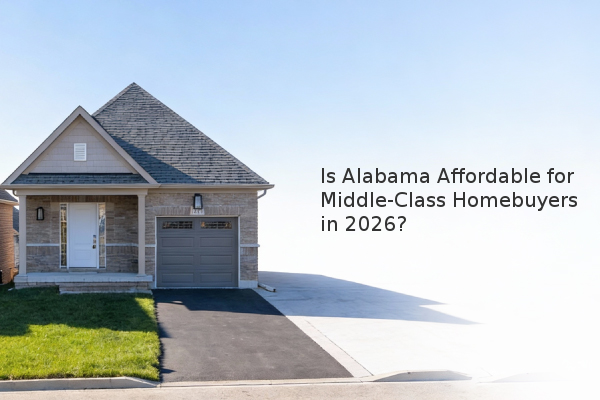
For middle-class Americans priced out of booming housing markets, Alabama presents a compelling and affordable alternative in 2026. The core reason is a unique alignment between median household income and median home prices, making homeownership an attainable goal without excessive financial strain.
How Does Alabama's Income Compare to Home Prices?
The fundamental metric for housing affordability is the relationship between what people earn and what homes cost. Based on an analysis of U.S. Census Bureau data, Alabama's median household income is approximately $62,212. This income level comfortably supports the purchase of a home priced around the state's median of $321,720. This creates a favorable scenario where the typical mortgage budget for a median-income household aligns closely with the average home price, leaving room for other living expenses and savings.
- Median Household Income: This is the middle point of all household incomes in the state, meaning half of the households earn more and half earn less. It is often a more accurate measure of typical earnings than the average income.
- Affordability Gap: In many states, there is a significant gap between median income and the income required to afford a median-priced home. Alabama's market is notable for its balance, reducing the pressure on household budgets.
Which Alabama Cities Offer the Best Quality of Life?
Beyond sheer affordability, Alabama offers diverse communities that appeal to different lifestyles. Growth is not uniform, with specific cities emerging as hubs for professionals and families.
- Huntsville and Birmingham: These metropolitan areas are attracting young professionals and families with a mix of job opportunities in tech and industry, cultural amenities, and housing options that remain below the national average. This combination supports a good quality of life without the steep cost of living found in other regions.
- Suburban and Small-Town Living: For those seeking a quieter pace, towns like Hoover—located near Birmingham—offer a suburban feel with access to outdoor activities. Areas like Moss Rock Preserve provide recreational opportunities, contributing to a high quality of life that is still accessible to middle-class budgets. Other towns such as Decatur and Daphne also represent attractive options for community-focused living.
What is the Long-Term Investment Potential in Alabama?
Purchasing a home is not just about immediate affordability; it's also a long-term investment. Alabama's steady population growth in key areas suggests potential for property value appreciation.
- Building Equity: Buying a home at a accessible price point allows homeowners to build equity—the difference between the home's market value and the outstanding mortgage balance—as they pay down their loan and as the property value potentially increases.
- Market Predictability: While no market is immune to fluctuations, Alabama's history of steady growth, rather than speculative booms, provides a more predictable environment for homeowners. This stability can be advantageous for long-term financial planning.
In summary, Alabama's housing market in 2026 is defined by its balance. The alignment of income and home prices makes it a standout option for middle-class homebuyers. The state offers a variety of living environments, from growing cities to serene towns, all with the potential for solid long-term investment. The key takeaway is that homeownership remains a realistic and prudent financial goal in Alabama for those earning a median income.


 Share