Browse

Log in / Register
 Share
Share
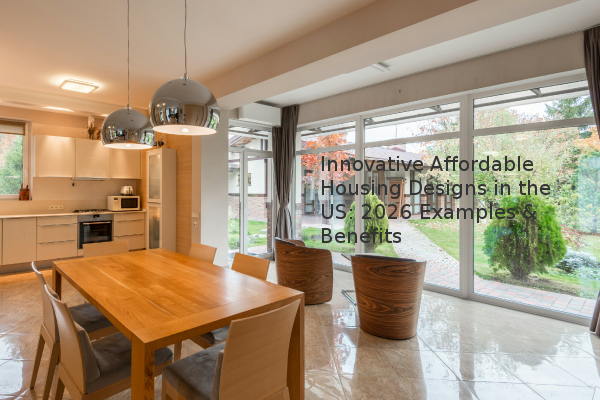
Modern affordable housing in the US is being redefined by innovative architectural designs that prioritize sustainability, community integration, and resident well-being. Contrary to outdated stereotypes of drab, institutional buildings, new developments across the country demonstrate that cost-effective housing can be aesthetically striking, environmentally conscious, and highly functional. This shift is crucial for gaining community acceptance and addressing the nation's housing shortage. Based on our experience assessment, well-designed affordable housing can enhance property values, improve neighborhood aesthetics, and foster stronger communities.
The term affordable housing refers to housing units whose total cost, including utilities, is set at a level deemed affordable to households earning at or below the median income for a specific area, as defined by the U.S. Department of Housing and Urban Development (HUD). Modern projects often embrace a mixed-use approach, a development strategy that combines residential, commercial, and cultural uses within a single building or neighborhood. This model promotes walkability and reduces reliance on cars. Furthermore, many new developments are mixed-income, integrating affordable units with market-rate rentals or for-sale homes to create economically diverse communities and avoid the concentration of poverty.
Architectural design directly impacts the daily lives of residents. For instance, the Stephens Creek Crossing development in Portland, Oregon, designed by MWA Architects, replaced 60 dilapidated apartments with 122 modern homes. The design philosophy prioritized resident connection to the environment. Large windows afford residents outside views that connect them to the landscape and enhance their sense of security. This intentional design choice provides natural light and a visual connection to the outdoors, which studies have shown can improve mental well-being. The inclusion of community centers and a Head Start school directly supports families and fosters a sense of place beyond the individual unit.
Sustainability is a cornerstone of contemporary affordable housing, offering long-term cost savings for residents and management companies through reduced energy and water consumption. Via Verde in the Bronx, New York, is a prime example. Developed on a 1.5-acre site, this project was designed for "green and healthy urban living." Its signature stepped form is inspired by the integration of nature and city, featuring extensive rooftop gardens, renewable energy sources, and spaces for urban agriculture. These features not only reduce the building's environmental footprint but also provide residents with access to green space and fresh food, contributing to overall health. Similarly, the Hancock Lofts in West Hollywood, California, by Koning Eizenberg Architects, uses sustainable strategies as a core design element, where all units are cross-ventilated and sliding wood screens are used to shade boulevard flats.
Absolutely. When thoughtfully integrated, affordable housing can become a neighborhood asset. The Pico Housing project in Santa Monica, California, designed by Moore Ruble Yudell Architects & Planners, is a 100% affordable development situated above retail and community spaces. The architects stated that the project "strives to contribute to the life of its residents, neighbors and the City, by providing a pedestrian-friendly urban façade to enliven the corner." By activating the street level with commercial activity and creating an engaging architectural presence, the development adds vitality and safety to the area, benefiting all residents, not just those who live there. This approach counters the notion that affordable housing is a detriment to a community.
To maximize the benefits of these innovative projects, prospective residents should research the specific design features and community amenities offered by new developments. Community leaders and policymakers can support this progress by updating zoning codes to encourage mixed-use and sustainable design. The key takeaway is that the future of affordable housing in the US lies in designs that are not only cost-effective but also beautiful, sustainable, and integrated into the fabric of their communities.