Browse

Log in / Register
 Share
Share

Colonial Revival is one of the most enduring and recognizable architectural styles in the United States. If you are looking at historic homes or newer constructions with traditional American appeal, understanding its key features is essential. The core characteristics of a Colonial Revival home include a symmetrical façade, a front entrance with decorative elements like a pediment, multi-pane double-hung windows, and a side-gabled roof. This guide will help you confidently identify these homes and understand their historical significance in the 2026 real estate market.
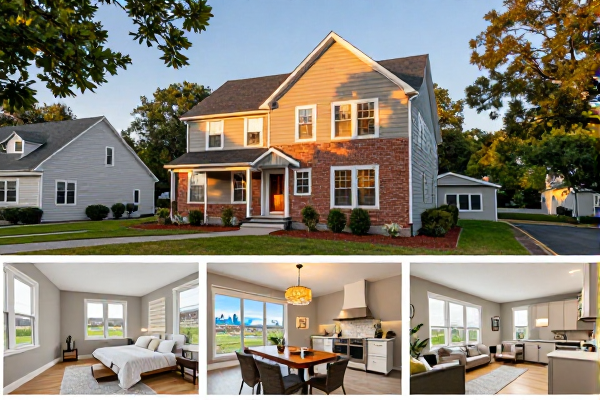
Colonial Revival homes are best identified by their orderly and balanced appearance. The most prominent feature is the symmetrical layout, where the front door is centered, and an equal number of windows are placed on either side. The entrance itself is often elaborate, featuring a decorative crown or pediment (a triangular gable found on the front of a building in classical style) supported by columns or pilasters. Windows are typically double-hung (a window with two vertically sliding sashes) with multiple panes in each sash, often arranged in a six-over-six or nine-over-nine pattern to mimic the look of historic glass. The roof is usually a simple side-gabled design, and the exterior is most commonly clad in wood clapboard or brick, with traditional white trim and black or dark green shutters.
The Colonial Revival style emerged as a direct response to the ornate and complex Victorian architecture that dominated the late 19th century. The movement gained momentum after the 1876 Centennial Exhibition in Philadelphia, which sparked a national wave of nostalgia for America's colonial past. Homebuilders and architects sought inspiration from earlier Georgian and Federal-style houses, favoring their simpler, more symmetrical layouts. The style's popularity surged in the early 20th century, fueled by features in popular books and periodicals. Based on our experience assessment, even economic downturns like the Great Depression reinforced the style's appeal; initiatives like the Historic American Buildings Survey, launched in 1933, documented original Colonial structures, further cementing their status as an American ideal.
While the symmetrical facade is a constant, the Colonial Revival style draws from several regional colonial precedents, leading to distinct variations. Key types include:
Virtually all these variations maintain the classic elements of elaborate entrances, cornices, and multi-pane windows.
Conclusion: Identifying a Colonial Revival home involves looking for a combination of symmetry, classical detailing, and traditional materials. When evaluating a property in 2026, focus on the balanced façade and the decorative front entrance as primary clues. Understanding these features not only helps in appreciating American architectural history but also aids in making informed decisions in today's diverse real estate market.