Browse

Log in / Register
 Share
Share
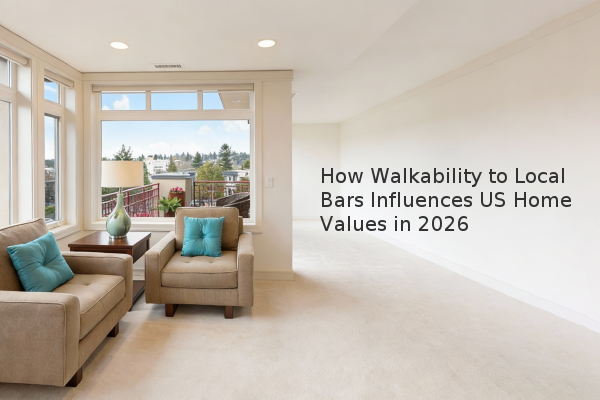
In 2026, a home's walking distance to popular social venues like bars can be a significant factor in its market value and appeal, particularly for buyers prioritizing lifestyle convenience. According to an analysis of real estate trends, properties located within a short walk of well-regarded local establishments often command a price premium and sell faster than comparable homes in less walkable areas. This valuation is not based on the bar itself, but on the broader Walk Score®—a measure of a location's pedestrian-friendliness—which has become a key metric for modern homebuyers.
What is a Walk Score and How Does it Impact Property Value?
A Walk Score is a number between 0 and 100 that rates the walkability of any address. It is calculated by analyzing hundreds of walking routes to nearby amenities. A score of 90-100 is a "Walker's Paradise," meaning daily errands do not require a car. Based on our experience assessment, a high Walk Score is increasingly correlated with higher property values. Homes in neighborhoods with robust walkability often have a competitive edge, as they offer residents reduced transportation costs and a more integrated community lifestyle. This is a key consideration in urban and suburban markets where buyers value convenience.
What Are the Practical Benefits of a Walkable Location?
The primary advantage is convenience and lifestyle enhancement. The ability to walk to a local bar, restaurant, or café reduces reliance on vehicles, which can lead to savings on gas, car maintenance, and rideshare surge pricing. From a safety perspective, it also eliminates the need to drive after socializing. Furthermore, these neighborhoods often foster a stronger sense of community, with more opportunities for social interaction. For real estate investors, properties in walkable areas can be attractive for both long-term rentals and short-term vacation rentals, assuming compliance with local ordinances.
How Should Buyers Evaluate Walkability When House Hunting?
When evaluating a home's walkability, buyers should look beyond a single amenity. A high Walk Score indicating access to a variety of destinations—grocery stores, parks, cafes, and pharmacies—is a stronger indicator of long-term value than proximity to just one popular spot. It is also crucial to physically test the walkability. A route that is a short distance on a map might be unpleasant or unsafe if it lacks sidewalks, has poor lighting, or requires crossing busy streets. Proximity to amenities should be balanced with the quality and safety of the pedestrian experience.
Are There Any Downsides to Living Near a Commercial District?
While the benefits are significant, there are potential trade-offs. Living near a bustling commercial area can sometimes mean dealing with increased noise, traffic congestion, and a relative lack of privacy, especially on weekends. Parking for personal guests can also be more challenging. Before purchasing, it is advisable to visit the property at different times of the day and week to assess the ambient noise levels and activity. Researching local zoning laws can provide insight into future development that might affect the neighborhood's character.
| Consideration | Advantage | Potential Drawback |
|---|---|---|
| Lifestyle | Easy access to social venues, community feel | Possible noise and reduced privacy |
| Financial | Higher property value appreciation, lower transport costs | Potential for higher property tax assessments |
| Practicality | Promotes healthier lifestyle, no need for DD | Limited parking, increased pedestrian traffic |
Conclusion: Key Takeaways for Home Buyers and Sellers
For buyers, prioritizing neighborhoods with a high overall Walk Score can be a smarter investment than focusing on a single nearby venue. The convenience and financial benefits are tangible, but due diligence on the specific walking environment is essential. For sellers, highlighting a home's walkability in listings—using specific metrics like the Walk Score and detailing nearby amenities—can significantly enhance the property's marketability. Ultimately, the integration of home and community is a powerful value driver in the 2026 real estate market.