Browse

Log in / Register
 Share

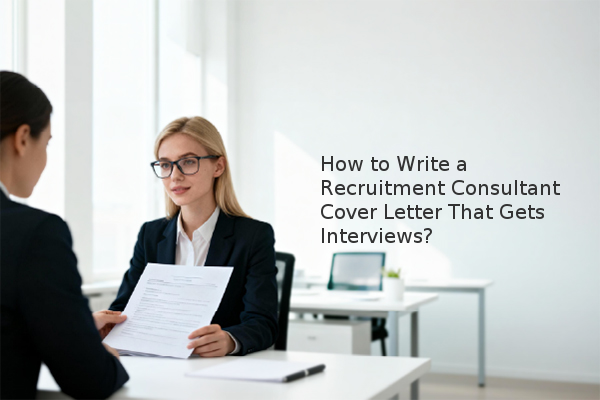
A well-crafted recruitment consultant cover letter significantly increases your chances of securing an interview by demonstrating your communication skills and industry understanding from the first interaction. Research shows that 83% of hiring managers consider cover letters important in their decision-making process, especially for client-facing roles like recruitment consulting where written communication is critical.
A recruitment consultant cover letter serves as your professional introduction, complementing your CV by highlighting how your specific skills align with the employer's needs. Unlike a CV that lists your experience, a cover letter allows you to connect your background directly to the firm's requirements, demonstrating your understanding of their business model and client base.
The most effective cover letters focus on transferable skills - abilities you've gained in previous roles that can be applied to the new position. For recruitment consultants, this might include relationship building, candidate sourcing strategies, or client management experience. Cover letters provide space to explain career transitions or gaps that might otherwise raise questions during the initial screening process.
Begin with thorough research on the recruitment firm and their specializations. Understanding whether they focus on permanent, temporary, or executive placements in specific industries allows you to tailor your letter accordingly. This demonstrates genuine interest beyond a generic application.
Your opening paragraph should immediately capture attention by mentioning how you learned about the position and why the specific firm appeals to you. Reference recent company achievements or industry recognition to show you've done your homework. For example: "I was impressed by your firm's recent expansion into the technology sector and believe my experience sourcing IT professionals aligns perfectly with this growth initiative."
The body paragraphs should follow a logical flow:
Use quantifiable achievements whenever possible, such as "improved candidate retention by 30%" or "reduced time-to-hire by 15 days." These concrete examples give hiring managers measurable evidence of your potential impact.
Generic applications rarely succeed in the competitive recruitment industry. Avoid using template language that could apply to any firm. Instead, customize each letter by mentioning the specific hiring manager's name when possible and referencing the firm's unique attributes.
Proofreading is non-negotiable for recruitment roles where attention to detail is paramount. Even minor errors can undermine your credibility as a communication expert. Consider having a colleague review your letter before submission to catch any overlooked mistakes.
Avoid repeating your CV verbatim. Instead, use the cover letter to provide context for your achievements and explain how they prepare you for this specific role. For instance, rather than simply stating "managed full recruitment cycle," describe how your end-to-end experience will benefit their particular client base.
Professional formatting matters. Use a clean, business-appropriate font and maintain consistent spacing throughout. Keep your letter to one page with clear paragraph breaks to ensure readability. Many hiring managers spend less than 30 seconds on initial application reviews, so visual appeal directly impacts whether your content gets read.
Focus on closing with confidence by reiterating your enthusiasm and suggesting next steps. A strong closing might state: "I'm confident my background in [specific skill] can help your firm achieve [specific goal] and would welcome the opportunity to discuss this further."
The most successful cover letters tell a compelling story about why you're the ideal candidate for this specific role at this particular firm. By following these guidelines and focusing on value creation rather than simply listing qualifications, you'll significantly increase your chances of progressing to the interview stage.
Please note that the example provided is for illustration purposes only and may require additional formatting to meet accepted standards. None of the companies or institutions mentioned are affiliated with ok.com.