Browse

Log in / Register
 Share
Share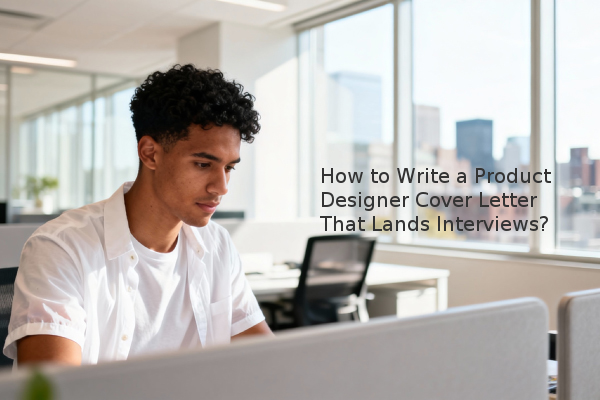
Crafting a targeted product designer cover letter is the most effective way to stand out in a competitive job market. A compelling cover letter can increase your application's visibility by up to 40%, according to recruitment industry data. This guide provides a step-by-step framework, complete with a template and an example, to help you structure a professional narrative that hiring managers notice.
Thorough research is the foundation of a personalized cover letter. Before drafting, meticulously analyze the company and the job description. This enables you to align your letter with the organization's culture and the role's specific requirements. Start by identifying keywords from the job advert, such as "user-centered design," "CAD software," or "Agile methodology." Mentioning these terms demonstrates you've read the description carefully. Additionally, understanding the company’s products, mission, and recent achievements allows you to craft an introduction that shows genuine enthusiasm and a strategic interest in their work, moving beyond a generic application.
A professional structure ensures clarity and impact. Follow this format for a polished presentation:
Focus on a blend of technical prowess and soft skills that are relevant to product design. The job description is your best guide for prioritizing which skills to emphasize.
| Technical Skills | Soft Skills | How to Present Them |
|---|---|---|
| CAD Software (e.g., SolidWorks, Fusion 360) | Creative & Conceptual Thinking | "Leveraged Fusion 360 to develop 10+ prototype iterations, reducing development time by 15%." |
| User Experience (UX) Research | Communication & Teamwork | "Collaborated with a cross-functional team of 5 engineers to deliver a user-tested product on schedule." |
| Prototyping & Wireframing | Ability to Work Under Pressure | "Managed the design phase for three concurrent projects, meeting all critical deadlines." |
Always back up your skills with measurable achievements. Instead of saying "experienced in CAD," specify how you used it to solve a problem or deliver a result.
A single typo can undermine an otherwise strong application. After writing, set the letter aside for a few hours before a final review. Read it aloud to catch awkward phrasing. Use grammar-checking tools, but also ask a trusted colleague or mentor in the design field to provide feedback. They can offer insights on both content and clarity. A meticulously proofread letter signals professionalism and attention to detail—key traits for any product designer.
In summary, a successful product designer cover letter is research-driven, strategically structured, and achievement-oriented. By personalizing your approach and quantifying your impact, you significantly increase your chances of securing an interview. Remember to thoroughly research the company, structure your letter professionally, highlight quantifiable achievements, and proofread meticulously before sending.