Browse

Log in / Register
 Share

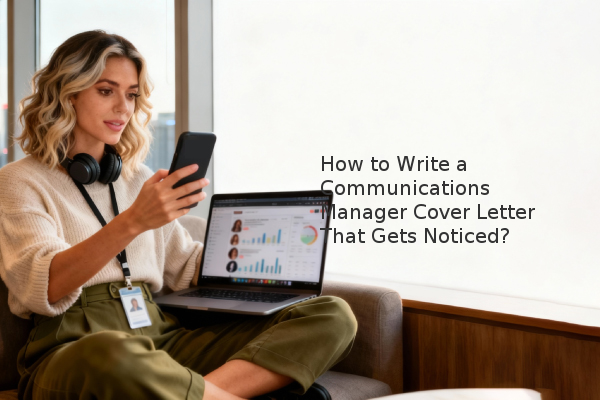
Crafting a targeted cover letter is a critical step for communications managers to demonstrate their value and secure an interview. A generic letter won't suffice; a successful application requires a document that directly addresses the employer's needs, highlights relevant achievements, and passes through digital screening tools. This guide provides a strategic approach to writing a cover letter that effectively showcases your qualifications.
The most crucial step is deep customization for each specific role. Submitting a tailored cover letter with every application significantly increases your chances. Begin by thoroughly researching the company's mission, goals, and recent news. Identify the key challenges mentioned in the job description and align your skills directly with them. For instance, if the role emphasizes crisis communications, highlight a specific, relevant achievement.
Many employers use an Applicant Tracking System (ATS), which is software that scans applications for keywords before they reach a human recruiter. To ensure your cover letter passes this initial screening, incorporate relevant terms from the job posting. Keywords for a communications manager might include: public relations, internal communications, corporate communications, media relations, stakeholder engagement, brand awareness, and content strategy. Weaving these terms naturally into your descriptions demonstrates a direct fit.
A clear, professional structure guides the hiring manager through your narrative. Start with your contact information at the top: full name, degree or relevant certification (e.g., Accreditation in Public Relations - APR), phone number, email, and location. Below this, include the date and the company's address.
Always strive to address the letter to a specific hiring manager by name. A quick search on professional networks like LinkedIn or a call to the company's HR department can often yield this information. A personalized salutation shows initiative and genuine interest. If the name is unavailable, use a professional generic salutation like "Dear Hiring Manager."
The first paragraph must immediately capture attention. Introduce yourself, state the exact position you're applying for, and express your enthusiasm. Briefly explain why you are drawn to the organization, connecting your career goals to their work. You can also mention a recent company achievement to show you've done your homework. Immediately include one standout achievement to validate your capabilities and encourage further reading.
The body of your cover letter is where you prove your value. Use one or two paragraphs to elaborate on your most relevant experiences. A highly effective method is the STAR method (Situation, Task, Action, Result). This technique provides a clear framework for describing your accomplishments.
For example: "(Situation) At my previous role, the company faced declining engagement on its primary social media channel. (Task) My task was to develop and implement a new content strategy to increase audience interaction. (Action) I led a cross-functional team to create a data-driven content calendar, incorporating video storytelling and interactive polls. (Result) This initiative resulted in a 40% increase in engagement and a 15% growth in follower count within three months."
Use this section to briefly address any potential questions on your CV, such as an employment gap, by framing it positively (e.g., "During my career break, I completed a certification in digital marketing analytics..."). Provide new information that isn't just a repeat of your CV, adding depth to your application.
The concluding paragraph should reaffirm your interest and initiate the next step. Express gratitude to the hiring manager for their time and consideration. Succinctly summarize your key qualifications in one to two sentences. Most importantly, include a call to action, such as stating your eagerness to discuss your application further in an interview. Mention your preferred contact method and availability.
Before sending, proofread meticulously. A cover letter free of errors underscores your attention to detail—a vital skill for any communications manager. Keep the document to one page, ensuring every sentence adds value. Consider asking a colleague to review it for clarity and impact.
To summarize, a winning communications manager cover letter is: