Browse

Log in / Register
 Share

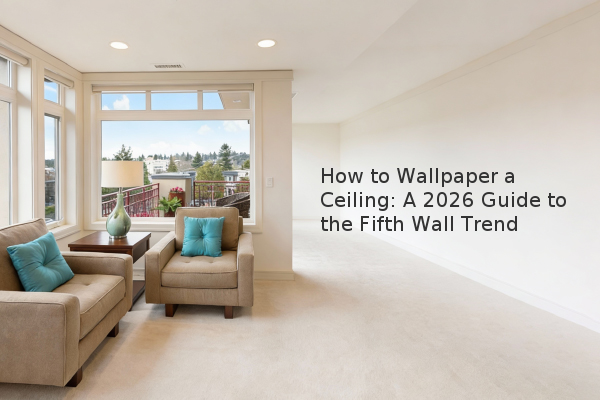
Wallpapering a ceiling, often called the "fifth wall" by designers, is a powerful 2026 design trend that can add significant personality and a sense of height to a room. However, achieving a professional look requires careful planning regarding the ceiling surface, color coordination, pattern scale, and the room's function. Based on our experience assessment, the key to success is treating the ceiling as a distinct design element that complements the entire space, not as an afterthought. This guide outlines the critical steps to ensure your ceiling wallpaper project is impressive and long-lasting.
Before selecting a pattern, the first step is a thorough inspection of your ceiling's condition. A successful installation depends on a smooth, stable base. Popcorn ceilings or surfaces with cracks, flaking paint, or a rough texture are not suitable for wallpaper, as the adhesive will not bond correctly and imperfections will show through. The ideal surface is smooth Sheetrock or plaster, whether previously painted or not. A clean, blemish-free, and primed surface ensures the wallpaper adheres properly and looks seamless for years to come.
Color and pattern selection is arguably the most critical creative decision. A pattern that looks stunning online can clash dramatically with your existing wall colors, flooring, or furnishings. The goal is harmony, not competition. Your ceiling paper should complement the wall color, but it does not need to be an exact match. A contrasting hue or texture can add depth and interest. For example, in a room with neutral gray walls, a ceiling paper with a subtle metallic silver pattern can add sophistication, while a bold floral print might overwhelm the space if not balanced correctly.
The size of the pattern relative to the size of your room is a crucial factor often overlooked. Choosing the wrong scale can make a room feel unbalanced. A larger print on the ceiling can help visually expand a smaller room, drawing the eye upward and creating an illusion of space. Conversely, larger rooms or those with high ceilings can handle oversized patterns, which help to bring the scale of the vast ceiling down to a more human level. For rooms with specific architectural features like tray or recessed ceilings, a smaller, more intricate pattern can highlight these details effectively.
The function of the room should directly guide your pattern choice. A whimsical pattern with animals or stars is ideal for a child's nursery, while a sophisticated geometric or damask print may be better suited for a formal dining room. Matching the pattern to the room's purpose ensures the design enhances the ambiance rather than working against it. In a powder room, where you can afford to be playful, a humorous or bold graphic print on the ceiling can create a memorable talking point for guests. In a bedroom, where relaxation is key, softer colors and more serene patterns are generally more appropriate.
Beyond aesthetics, practical considerations ensure a durable and visually correct installation. If your chosen pattern has distinct lines or a directional motif, the direction of the pattern can influence the room's perceived flow. Linear patterns can be aligned to accentuate the room's length or width. Furthermore, for those considering a maximalist approach with wallpaper on both walls and ceiling, it is often advisable to use a large-scale pattern on the ceiling and a smaller, coordinating pattern or a solid paint color on the walls to prevent the space from feeling chaotic.
Successfully wallpapering a ceiling elevates your home's design by utilizing often-neglected space. The process requires attention to surface preparation, thoughtful color and pattern coordination, and an understanding of how scale and room function interact. By following these guidelines, you can transform your fifth wall into a stunning design feature that adds unique character and value to your home.