Browse

Log in / Register
 Share
Share
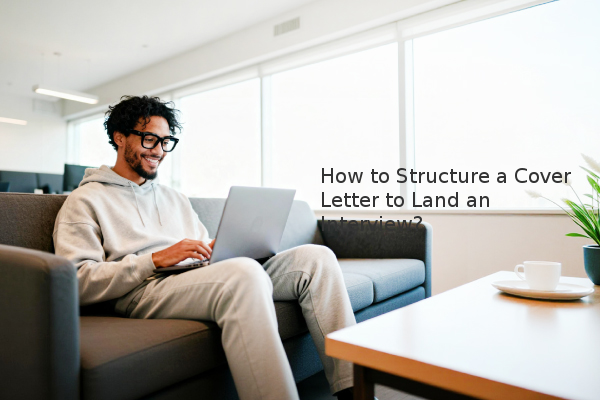
A well-structured cover letter, typically confined to three focused paragraphs, is your primary tool for highlighting your suitability for a job and motivating a recruitment manager to call you for an interview. The most effective letters follow a professional format, include targeted content that mirrors the job description, and are optimized for both human readers and Applicant Tracking Systems (ATS)—software used by employers to filter applications. Based on our assessment of successful applications, the key is to connect your achievements directly to the role's requirements.
A professional cover letter comprises six key sections that create a logical and persuasive narrative. Adhering to this structure ensures you include all necessary information clearly and concisely.
To ensure your letter passes through an ATS and is easy for a time-pressed manager to read, follow these technical formatting guidelines. Applicant Tracking System (ATS) compatibility is critical for many online applications.
| Formatting Element | Recommendation | Why It Matters |
|---|---|---|
| Font | Use standard, sans-serif fonts like Arial, Calibri, or Verdana (10-12 pt). | Fancy fonts can be unreadable by ATS software and appear unprofessional. |
| Spacing | Single-spaced text with a space between each section. Left-align text; do not indent paragraphs. | Creates clean whitespace, improving scannability and visual appeal. |
| Length | Strictly one page with three primary paragraphs. | Respects the recruiter's time and demonstrates conciseness. |
| Margins | Use standard 1-inch margins. | Prevents the document from looking cluttered or squished. |
| File Format | Save as a .doc or PDF. Name the file professionally (e.g., FirstName-LastName-Cover-Letter.pdf). | Ensures compatibility with most ATS and makes your file easy to identify. |
Seeing a well-formatted example helps solidify the principles. Below is a template demonstrating how to integrate all the elements into a compelling narrative.
Tara Treadwell London, UK +44 4555 5555 55 tara.treadwell@email.com
[Date]
Dear Recruitment Manager,
I’m excited to be applying for the Web Developer position at [Company Name] that I saw advertised on ok.com. Your company's reputation for innovation, evidenced by your win at the National Web Development Awards, strongly aligns with my passion for creating cutting-edge user experiences.
In my previous role at [Previous Company], I was tasked with building a website from scratch for a rebranded business. By gathering client requirements and conducting user research, I delivered the project ahead of schedule. Post-launch, I led optimization efforts using A/B testing, which resulted in a 10% increase in click-through rates and a 35% reduction in bounce rates on the key landing page. This experience has directly prepared me to develop high-performing websites that drive business results for your team.
Thank you for your time and consideration. I am eager to discuss how my skills in web development and commitment to innovation can contribute to [Company Name]'s success. I look forward to the possibility of an interview.
Sincerely, Tara Treadwell
To maximize your cover letter's impact, focus on creating a clear, professional structure that tells a compelling story about your fit for the role. Use the job description as a guide for your keyword match, and always proofread meticulously before sending. A strong cover letter significantly increases your chances of moving forward in the recruitment process.