Browse

Log in / Register
 Share

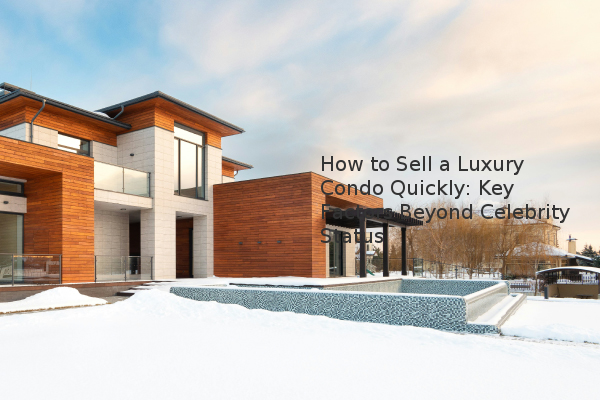
Selling a high-end condominium swiftly in a competitive market often depends more on strategic pricing, property features, and market timing than on a high-profile owner. Based on our experience assessment, achieving a quick sale, even in a market like New York City, requires a property to be positioned correctly from the outset, particularly by aligning the asking price with the unit's inherent value and current buyer demand. A recent analysis of a high-profile transaction suggests that breaking even on a quick turnaround sale requires a carefully calculated price point that accounts for significant acquisition and selling costs.
While celebrity ownership can generate initial buzz, it is rarely the decisive factor for a buyer making a multimillion-dollar investment. The primary drivers for a quick sale are often more pragmatic. Properties priced competitively within their building and market segment attract serious buyers faster. For instance, a unit that is the most affordable in a prestigious building can be highly appealing, as it offers entry into a desirable address without the premium for top-floor, unobstructed views. Market conditions are also critical; a strong seller's market with limited inventory can facilitate a quicker transaction.
When a property is sold shortly after purchase, the financial outcome is heavily influenced by transaction fees. Closing costs are the various fees and expenses paid by both the buyer and seller at the completion of a real estate transaction. In a quick resale, the seller must recover these initial costs to avoid a loss. For a purchase above $15 million, these can be substantial. A realistic breakdown includes:
To simply break even on a property bought for $15.3 million, the final sale price must often exceed $17.3 million, underscoring that the listed asking price is not synonymous with net profit.
A well-known previous owner does not automatically translate into a higher sales price. While it may attract curiosity, sophisticated buyers base their decisions on the property's tangible attributes: square footage, layout, views, building amenities, and financial health of the homeowners association. The perception of a "successful" home is subjective. In fact, a property being associated with a celebrity does not shield it from market forces. Some high-profile listings can remain on the market for years if priced above their perceived market value, demonstrating that long-term market appeal is determined by value, not vanity.
For homeowners aiming to sell their property efficiently, several actionable strategies can increase the likelihood of a fast closing. Setting a realistic asking price based on recent comparable sales is the most critical step. Overpricing a property, even a luxurious one, is the most common reason for a stagnant listing. Additionally, ensuring the property is in impeccable condition—through professional staging and photography—can significantly enhance its online and in-person appeal. Finally, understanding your break-even point is essential before listing, allowing for a pricing strategy that meets your financial goals while remaining attractive to buyers.
Achieving a quick sale in the luxury market hinges on fundamental real estate principles rather than extraordinary circumstances. Sellers should focus on accurate pricing, a clear understanding of all transaction costs, and highlighting the property's objective strengths to attract serious buyers and facilitate a smooth, successful transaction.