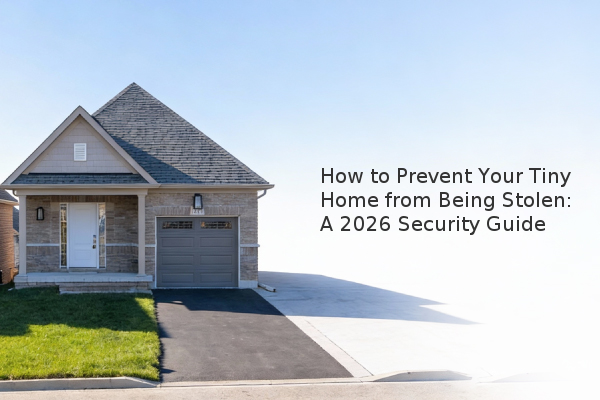
The most effective way to prevent your tiny home from being stolen is to implement a multi-layered security plan focused on immobilizing the trailer and fortifying entry points. Removing the wheels entirely is the single most secure option, but for those who require mobility, high-quality wheel locks, a secure tongue lock, and a deadbolted door are non-negotiable essentials. This guide outlines verifiable security measures, based on builder expertise, to protect your investment.
Why Are Tiny Homes Vulnerable to Theft?
The primary vulnerability of a tiny home stems from its portability. Many are built on trailers, making them convenient for owners who wish to relocate but also an attractive target for thieves with the right equipment. Unlike a traditional, foundation-built home, a tiny home can be hitched to a vehicle and driven away in a matter of minutes if not properly secured. This unique risk was highlighted by a well-publicized 2013 incident where a Texas man's entire tiny home was stolen from his property. While national statistics are not tracked, such events underscore the critical need for proactive security measures.
How Can You Immobilize a Tiny Home on Wheels?
The first line of defense is to make the home difficult or impossible to move. Relying on simple wheel chocks is insufficient, as they can be easily kicked aside.
- The Most Secure Method: Remove the Wheels. For tiny homes that will remain in a fixed location for an extended period, placing the house up on permanent supports and removing the wheels eliminates the primary theft risk. This is the most definitive solution.
- For Mobile Homes: Invest in High-Quality Locks. If mobility is necessary, you must secure the mechanism that allows the home to be moved.
- Wheel Locks: Install robust, keyed locks on the wheels themselves. These are available at automotive and hardware stores and prevent the wheels from turning once engaged.
- Tongue Lock: The tongue is the part of the trailer that attaches to a vehicle's hitch. A high-security, hidden-shackle padlock is recommended, as these are resistant to bolt cutters. A would-be thief cannot tow the home away if they cannot attach it to their vehicle.
- Economical Alternative: Weaving a thick steel cable through the wheels and securing it with a padlock offers a basic level of deterrence. However, for an asset as valuable as a home, investing in dedicated, heavy-duty locks is a more reliable strategy.
What Are the Best Ways to Secure Doors and Windows?
While preventing the whole home from being stolen is the priority, securing its contents is equally important. Tiny homes can appear more accessible to burglars.
- Door Security: The door is the most likely target for a break-in. Always install a deadbolt lock that fully engages into the door frame. This provides significant resistance against forced entry. For added security, choose a solid door without glass panels, which are easy to break.
- Window Security: Even small windows should be secured. Ensure all windows are double-paned and have functioning locks. A window that seems too small to enter can still be broken to reach inside and unlock the door.
What Security Checks Should You Perform Before Leaving?
A consistent routine before any absence is crucial. Based on our experience assessment, a thorough check can prevent most security failures.
- Test All Locks: Physically check the wheel locks, tongue lock, door deadbolt, and window locks.
- Inspect for Damage: Look for signs of tampering or wear on any lock that might require a replacement.
- Secure All Keys: Never leave the keys to your wheel or tongue locks inside the home. A burglar who breaks in could then easily steal the entire structure. Always take these keys with you.
Implementing a combination of immobilization tactics and robust entry-point security dramatically reduces the risk of theft. By taking these steps, tiny home owners can gain peace of mind and protect their property from both burglary and the far more devastating prospect of the entire home disappearing.


 Share
Share