Browse

Log in / Register
 Share

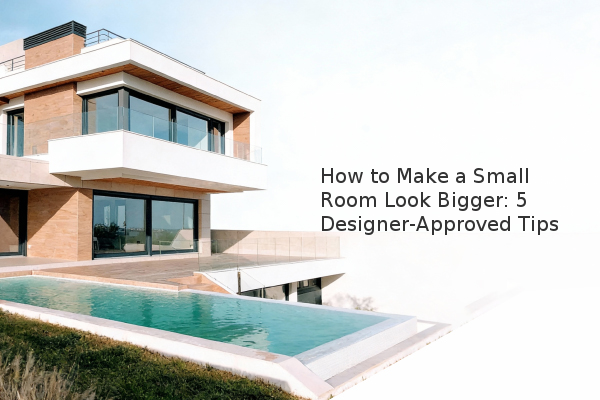
If your home is feeling cramped, strategic design choices can create a significant sense of space without undertaking a major renovation. Based on our experience assessment, the most effective methods involve manipulating light, perception, and layout. The key to making a room look larger is to enhance natural light, create visual continuity, and choose furniture that promotes an open sightline. This article outlines five actionable strategies to achieve this, from simple mirror placements to a cohesive color scheme.
Placing a mirror opposite a window is a time-honored technique for a reason: it effectively doubles the perceived space by reflecting light and the view. As light bounces off the mirror, it brightens the room and creates an illusion of depth. The orientation of the mirror also matters. A vertical mirror can make ceilings appear taller, while a horizontal mirror can make a room feel wider. This is one of the most cost-effective and immediate changes you can make to alter the perception of a room's dimensions.
A common mistake is pushing all furniture against the walls in an attempt to free up floor space. However, this can often make a room feel hollow and disconnected. Interior designers often recommend "floating" key pieces, like a sofa, away from the walls. Floating the sofa away from the perimeter can create a more intimate conversation area and make the overall layout feel intentional and spacious. This approach also frees up wall space for functional storage solutions or a single, bold piece of art that doesn't clutter the sightlines.
The placement of curtains has a dramatic impact on the perceived height of your ceilings. The optimal strategy is to install the curtain rod several inches above the top of the window frame, allowing the drapes to graze the floor. Hanging drapes high and wide forces the eye upward, creating the illusion of taller ceilings. For the best effect, choose light, semi-transparent fabrics that allow ample light to filter through, maintaining a bright and airy atmosphere.
Color drenching, a technique that involves painting the walls, trim, doors, and sometimes even the ceiling the same color, is highly effective for small spaces. This method creates a seamless, uninterrupted visual flow that makes boundaries less defined, thereby expanding the space visually. While dark colors can create a cozy feel, light neutrals like white, cream, pale gray, or light blue are optimal for maximizing a sense of openness. For added depth, use the same color paint but in different sheens (e.g., matte on walls, semi-gloss on trim).
Selecting the right furniture is critical. Contrary to instinct, a few larger, substantial pieces can make a room feel less cluttered than many small, scattered items. The key is to choose pieces that are lower to the ground to clear visual space above. Furniture that sits lower to the ground creates an open and lofty vibe. Additionally, incorporating tables, desks, or chairs made from transparent materials like lucite or glass allows light to pass through, making the pieces seem to "disappear" and further enhancing the feeling of openness.
To maximize your space, focus on these core principles: enhance light with mirrors, create visual height with curtains, ensure layout flow with floated furniture, unify the space with a consistent color palette, and select furniture that maintains clear sightlines. These strategies are predictable ways to transform the feel of any compact room.