Browse

Log in / Register
 Share

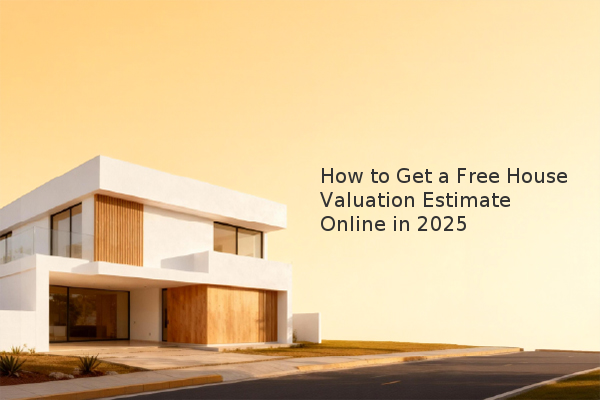
Getting a free house valuation estimate online is a quick and convenient first step to understanding your property's potential market worth, but it is crucial to recognize its limitations. These automated valuation models (AVMs) use algorithms and public data, providing a starting point that should be supplemented with a professional appraisal or comparative market analysis for major financial decisions. The accuracy can vary significantly based on local market data availability and your home's unique characteristics.
The accuracy of an online house valuation estimate depends heavily on the quantity and quality of data available for your area. In neighborhoods with many similar homes (comparables or "comps") that have sold recently, AVMs can be reasonably accurate. However, they often struggle with unique properties, recent major renovations, or in rural areas with fewer data points. An AVM cannot physically inspect your home, meaning it won't account for an updated kitchen, a neglected roof, or a poorly maintained interior. Most reputable AVM providers will give a confidence score or value range, which is a key indicator of reliability. A narrow range and high confidence score suggest a more reliable estimate.
The process is designed for speed and ease of use. You typically enter your property address, and the algorithm does the rest. Some platforms may ask for additional details like square footage, bedroom and bathroom count, or recent upgrades to refine the estimate. The system then compares your home to similar properties that have recently sold in your vicinity. This is known as a Comparative Market Analysis (CMA), which is a method real estate professionals use to determine a home's value. The result is usually displayed instantly, often with a value range and a breakdown of the estimated home value per square foot.
| Step | Action | Purpose |
|---|---|---|
| 1 | Enter Property Address | To pull all available public data on your home. |
| 2 | (Optional) Provide Home Details | To refine the estimate if public data is incomplete. |
| 3 | Algorithm Processes Data | Compares your home to recent sales of comparable properties. |
| 4 | Receive Instant Estimate | Provides a starting point for understanding market value. |
Relying solely on an online estimate can be misleading. The most significant limitation is the lack of a physical inspection. An algorithm cannot see the condition of your property. Furthermore, AVMs lag behind rapid shifts in the market; in a quickly appreciating or declining market, the estimate may not reflect the current reality. They also may not recognize non-conforming uses, such as a residential property being used for business, which can affect value. Finally, these tools do not consider local nuances, like the desirability of a specific street or micro-neighborhood within a larger zip code.
An online house valuation estimate is best used as an informational tool, not a definitive price. It is excellent for initial curiosity, tracking general market trends in your area, or preparing for a conversation with a real estate agent. Before selling or refinancing, use the online estimate as a baseline, but then consult a local real estate agent for a professional CMA. A good agent will combine the data an AVM uses with their on-the-ground knowledge of the neighborhood and a qualitative assessment of your home's condition. For legal matters like divorce or estate settlement, a formal appraisal from a licensed appraiser is typically required.
In summary, online valuation tools offer a free and instant snapshot of your home's worth.