Browse

Log in / Register
 Share
Share
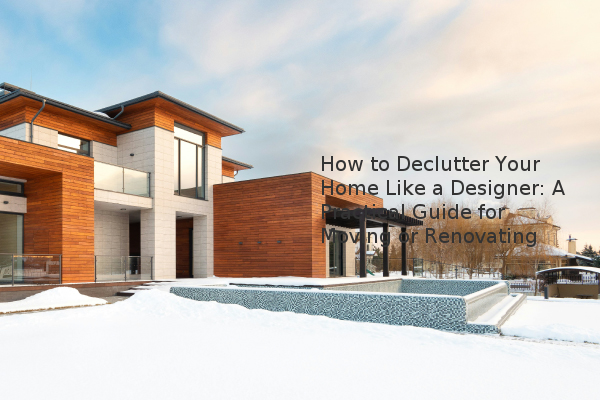
Even acclaimed interior designers struggle with parting with personal belongings, viewing a move as a prime opportunity to thoughtfully edit possessions. According to design experts, a well-designed home is not about perfection but about creating a space that genuinely reflects your current life and aspirations. This guide translates professional decluttering and design philosophies into actionable steps for any homeowner.
The most effective way to declutter is not to make isolated decisions about individual items but to consider your possessions as a collective story. Based on our experience assessment, a successful strategy involves a thorough, category-by-category review of everything you own.
Professional designers often have homeowners walk through their spaces to understand the emotional and practical value of items. The key is to ask whether each object "brings you joy" or serves a necessary function in your life today, not the life you lived years ago. As designer Jeremiah Brent notes, "Life changes and there's an evolution... and your home doesn't often represent that evolution." This process helps identify what you need to move on from, ensuring your environment aligns with who you are now.
A residential move forces a complete inventory of your possessions, making it an ideal time to curate your belongings. The goal is to bring only the "best of the best" and the items you truly care about to your new space.
Start by going through every category, from coffee cups to socks, and be ruthless in your assessment. This is a chance to craft a new beginning for your space. Designer Nate Berkus admits that while parting with beautiful pieces can be difficult, the result is a home free from the obligation of using things that no longer fit your lifestyle. Embracing this edit allows you to build a living area that feels authentically yours.
The core principle is to design for the life you actually live, not for an idealized version of it. Beautiful design is secondary to functionality and personal meaning.
Ask pragmatic questions: Where does your day start and end? What rituals are important to your family? For instance, a formal dining room may be unnecessary if your family prefers casual meals at a kitchen island. Jeremiah Brent emphasizes, "Beautiful design doesn't keep you anywhere. It’s about creating a space that can really hold all of those moments that are important to your family." Your home should tell your story, with objects that remind you of your past and inspire your future.
Establishing consistent habits is more effective than one-time purges. For families, this means integrating decluttering into the regular rhythm of the household.
Practical solutions include using labeled bins for organization and implementing a "donate one, get one" rule for new toys. Designers Nate and Jeremiah involve their children in the process, teaching them to continually donate items they no longer use. This ongoing practice prevents the accumulation of clutter and reinforces that a home is a living space that requires regular curation. Creating these systems makes maintenance manageable.
The most frequent mistake is prioritizing speed over thoughtful curation. The pressure to furnish a home quickly often leads to regrettable purchases and a generic look.
Good design is not about filling a space with new furniture sets or accessories in a single weekend. Instead, it is a gradual process of discovering what truly resonates with you. As Nate Berkus states, "Good design is taking the time to really figure out what makes your heart sing." Taking your time allows you to make intentional choices that fit your budget and create a unique, personal home you will love for years.
Ultimately, a successful home is an evolving project. It should be a comfortable, functional backdrop for your life's most important moments, not a static showroom. By focusing on intentional decluttering and designing for your real-life needs, you can create a space that is both beautiful and authentically yours.