Browse

Log in / Register
 Share
Share
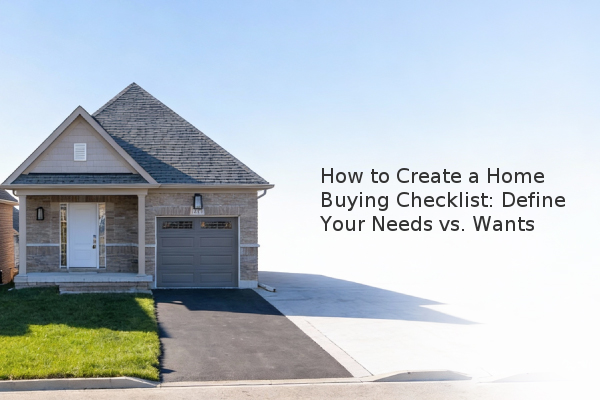
Creating a detailed home buying checklist is the most critical step after mortgage pre-approval to efficiently find a property that fits your lifestyle and budget. By clearly defining and prioritizing your needs versus your wants, you can streamline your search, communicate effectively with your real estate agent, and be prepared to make confident compromises. This practical guide provides a framework to build your personalized list of housing requirements.
Your checklist should be divided into non-negotiable needs and desirable wants. A need is a feature essential for your family's safety, health, and daily functioning, such as the number of bedrooms or proximity to work. A want is an amenity that enhances your lifestyle but is not essential, like a swimming pool or a gourmet kitchen. This distinction is crucial for making rational decisions in a competitive market, especially when your budget is fixed.
Start by considering these categories:
Once you have a list, the next step is to rank each item. Use a simple three-tier system: 'Must Have,' 'Like to Have,' and 'Don't Care.' This exercise forces clarity and helps your real estate agent filter listings effectively. For example, a fenced yard for a pet may be a 'Must Have,' while hardwood floors might be a 'Like to Have.' Based on our experience assessment, buyers who complete this prioritization report feeling more in control and less likely to be swayed by emotionally appealing but impractical features.
| Priority Tier | Definition | Examples |
|---|---|---|
| Must Have | Non-negotiable requirements for the home to be functional. | Specific number of bedrooms, school district, maximum commute time. |
| Like to Have | Desirable features you are willing to compromise on for the right price/location. | Updated kitchen, swimming pool, large backyard, specific architectural style. |
| Don't Care | Features that will not influence your decision. | Bathroom tile color, specific appliance brands, landscaping details. |
It is almost certain that your list will evolve as you view properties. You may discover that a priority like "ocean-front" is financially unattainable, making "a short drive to the beach" an acceptable compromise. Flexibility is not a sign of failure but a strategic adjustment to market realities. Being overly rigid can prolong your search unnecessarily. Revisit your checklist after visiting a few homes to see if your initial assumptions still hold true.
To find your ideal home, begin with a structured, written checklist that separates needs from wants. Prioritize features ruthlessly and partner with a knowledgeable real estate agent who can use your list to target suitable properties. Remember, the goal is to find a home that meets your essential requirements while remaining open to opportunities that may redefine your definition of a "dream home."