Browse

Log in / Register
 Share

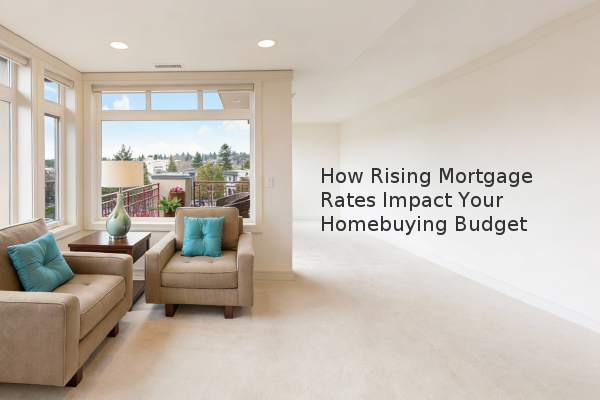
Rising mortgage interest rates directly reduce a homebuyer's purchasing power, but a recent survey indicates nearly half of buyers remain undeterred. According to industry analysis, an increase from 2.75% to 3.25% on a 30-year fixed-rate mortgage can decrease a buyer's maximum affordable home price by over $23,000 on the same monthly budget. While this shift is beginning to cool the frenzied competition in some markets, historically low rates continue to motivate buyers who are weighing rising costs against rapidly appreciating home values.
Your purchasing power—the maximum home price you can afford based on your monthly budget—is highly sensitive to changes in mortgage rates. This is because a higher interest rate increases the cost of borrowing, meaning a larger portion of your monthly payment goes toward interest rather than paying down the loan principal.
For example, with a monthly budget of $2,500 for principal and interest, a buyer could afford a $529,250 home at a 2.75% interest rate. If that rate rises to 3.25%, the maximum affordable price drops to $506,000 on the same budget—a loss of $23,250 in purchasing power. Alternatively, the monthly payment on a $506,000 home would increase by $110, from $2,390 to $2,500.
Current data suggests a nuanced effect. A significant survey found that 44% of respondents said a rate increase above 3.5% would not impact their homebuying plans. Only 10% stated they would cancel their plans entirely. This resilience is attributed to the fact that even with recent increases, mortgage rates remain low by historical standards. As one market expert noted, "Rates are still historically low and they’re still keeping buyers in the market. Even though rates are creeping up, they’re not increasing nearly as quickly as home prices."
The reduction in purchasing power has a tangible impact on the number of homes available to a typical buyer. Based on a $2,500 monthly budget, the share of homes for sale nationwide that are considered affordable drops from 70.1% at a 2.75% rate to 68.4% at a 3.25% rate. This means a buyer has fewer options within their budget as rates climb. The following table illustrates how affordability changes with different monthly payments and rates, assuming a 20% down payment.
| Monthly Budget | 2.75% Rate | 3.25% Rate | Loss in Purchasing Power |
|---|---|---|---|
| $2,000 | $423,400 | $404,800 | $18,600 |
| $2,500 | $529,250 | $506,000 | $23,250 |
| $3,000 | $635,100 | $607,200 | $27,900 |
| Table assumes a 20% down payment, property taxes of 1.25%, and homeowners insurance at 0.5% of home value. |
The impact of rising rates is not uniform across the United States. Markets with higher median home prices experience a more significant effect. For instance:
The future path of mortgage rates is closely tied to broader economic recovery and inflation. The Federal Reserve's policies and economic stimulus measures will be key factors. Based on our experience assessment, if the economy continues to strengthen, rates could gradually approach pre-pandemic levels around 3.5%. This would likely alter market dynamics by making buyers more price-conscious, potentially reducing the frequency of intense bidding wars, but sustained demand for affordable housing is expected to continue.
For potential buyers, the key takeaway is to focus on your personal budget and long-term goals rather than trying to time the market. Get pre-approved to understand your exact purchasing power at current rates, and be prepared for a more competitive environment in the affordable price tier. Acting while rates are still historically favorable may help you avoid paying a premium on a home later if prices continue to rise.