Browse

Log in / Register
 Share
Share
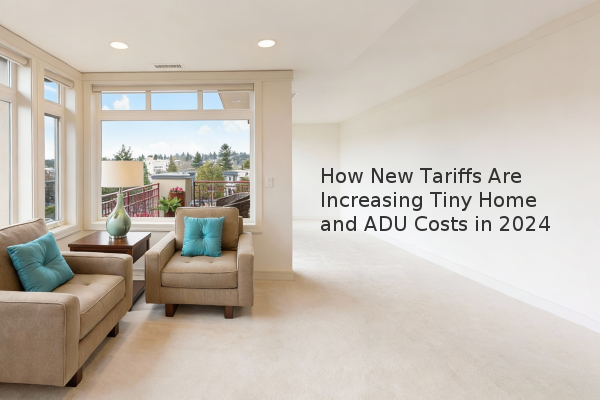
Recent tariffs on imported building materials are directly increasing the cost of building tiny homes and Accessory Dwelling Units (ADUs), potentially impacting affordability for homeowners. Key industry leaders confirm that prices for some models have already risen by over 50%, signaling a significant shift for this popular housing alternative. While a 90-day tariff pause exists for some countries, immediate tariffs on Chinese goods have jumped to 145%, affecting a wide range of construction components. This analysis provides a clear breakdown of the current cost landscape and what potential builders can expect.
Tariffs function as a government tax on imported goods. When the cost of raw materials increases, the final price of a construction project inevitably rises. According to Buddy Hughes, Chairman of the National Association of Home Builders, these tariffs "will undoubtedly raise some construction costs." This is because many tiny home manufacturers rely on imported components. For example, one builder, BoxHouse, reported that its model "The Bungalow" saw its starting price increase from $80,000 to over $123,000 due to its reliance on Chinese-sourced parts. Essential materials like steel, aluminum, lighting, and appliances from China are now subject to higher costs.
The cost of a tiny home or ADU varies significantly based on size, customization, and location. It's crucial to understand the full financial commitment beyond the initial price tag.
| Housing Option | Typical Cost Range | Key Considerations |
|---|---|---|
| Pre-fab Tiny Home | $30,000 - $70,000 | Costs can near double after factoring in foundation, utility hookups, and delivery. |
| Custom-Built ADU | $80,000 - $400,000 | Highly variable based on design, materials, and local permitting fees. |
| Home Addition | $22,500 - $80,100 | Often involves complex integration with an existing home's structure and systems. |
While online marketplaces list tiny homes for $10,000-$50,000, Paul Dashevsky, co-CEO of ADU leader Maxable, notes that after construction, utilities, and a foundation, the total cost often doubles the initial purchase price.
Homeowners concerned about tariff-driven prices have alternatives. Some builders prioritize American-made materials to insulate their customers from import taxes. Dan Dobrowolski, CEO of Escape Traveler, states, "Our units are American-made from American products... so the tariffs have very little effect on us." Additionally, the complexity of a project influences cost. Attached additions can sometimes be more affordable than detached ADUs, as noted by homebuilder Bar Zakheim, CEO of Better Place Design & Build, because they avoid the challenges of creating a entirely new structure.
The financial payoff is a major consideration. An ADU, defined as a secondary, independent living unit on the same lot as a primary residence, often offers a strong Return on Investment (ROI). Real estate expert Rebecca Hidalgo Rains explains that an ADU is "more valuable than an addition, since you are adding an additional home on your property." This added utility can make the property more attractive to future buyers. Furthermore, the ability to generate rental income provides a safety net and ongoing revenue stream, a significant advantage in a high-interest-rate environment.
In summary, while tariffs are introducing new cost pressures, the demand for tiny homes and ADUs remains strong due to housing affordability challenges. When planning a project: