Browse

Log in / Register
 Share

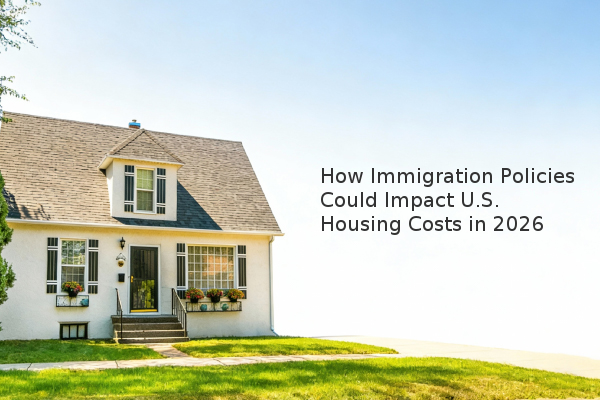
The relationship between immigration enforcement and U.S. housing market dynamics is complex. While reducing the number of undocumented immigrants is sometimes proposed as a way to lower housing costs, a comprehensive analysis for 2026 suggests the opposite: large-scale deportations could exacerbate the nation's housing affordability crisis by intensifying a critical labor shortage in the construction industry, potentially driving up the cost of new homes.
A significant reduction in the workforce could directly impact the residential construction sector, which is already facing a severe labor shortfall. According to pre-2024 estimates from the Center for Migration Studies of New York, the construction industry employed approximately 1.5 million undocumented workers. This group represented a substantial portion of the national construction workforce, with their share being much higher in states like Texas. These workers are often drawn to the sector due to its reliance on subcontractor networks and independent contracting.
Based on our experience assessment, a sudden removal of this labor force would force builders to invest significant time and money in recruiting and training replacements. This process would likely increase labor costs, as builders would need to offer higher wages to attract a smaller pool of available workers. These increased costs would then be passed on to homebuyers, making new construction more expensive at a time when the U.S. already faces a deficit of several million housing units.
The direct impact of undocumented immigrants on homebuying demand is minimal. Undocumented individuals living in the U.S. are not eligible for conventional mortgages. While alternative, obscure mortgage products exist, estimates from the Urban Institute indicated that only between 5,000 and 6,000 such mortgages were issued in a recent year. This figure represents a fraction of a percent of all new mortgages.
Therefore, the number of homes purchased by undocumented individuals is not a primary driver of home price appreciation. In contrast, data from the National Association of Realtors has shown that foreign buyers living outside the U.S. purchase tens of thousands of properties annually, a factor with a more substantial impact on certain market segments. Removing a small number of potential undocumented buyers from the market is unlikely to create a noticeable drop in overall demand or prices.
The most immediate impact of large-scale deportation could be felt in the rental market. Academic studies have historically found that a 1% increase in a city's population correlates with a rent increase of about 1%. Conversely, a rapid decrease in population could soften demand for rentals. This could lead to lower rents, which might, in turn, encourage some would-be first-time homebuyers to continue renting.
This shift in demand could, over a longer period, ease pressure on the for-sale housing market. However, this effect would not be immediate and would be offset by the upward pressure on new home prices caused by construction labor shortages. The net effect on overall housing affordability remains unpredictable and would vary significantly by local market.
In summary, the interplay between immigration policy and housing costs is multifaceted. While the rental market might see a short-term dip in demand, the critical shortage of construction labor is a more fundamental issue. Policies that shock the construction workforce are predicted to increase the cost of building new homes, ultimately working against the goal of improving housing affordability. Addressing the core issue of the housing supply deficit requires a stable and robust labor force.