Browse

Log in / Register
 Share
Share
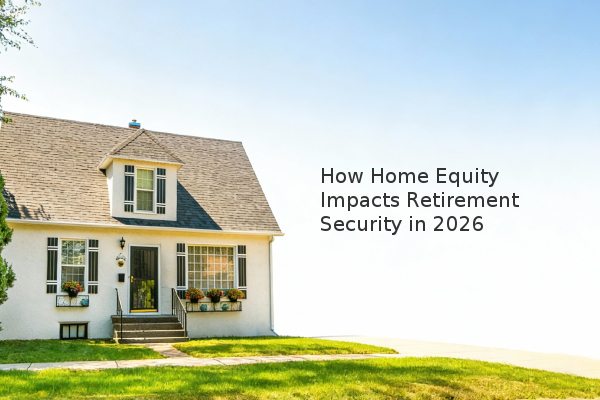
For retirees, the decision of when to claim Social Security benefits is often directly linked to their ability to maintain housing stability. While these benefits provide essential income, a frequently overlooked asset—home equity—can play a critical role in this financial equation. For many, the value built up in their home represents their largest store of wealth, and strategic planning around this asset is crucial for long-term security. Based on our experience assessment, understanding the interplay between government benefits and home equity is the key to navigating retirement without jeopardizing one's primary residence.
Social Security benefits are a form of mandatory government spending, meaning payments continue even during federal government disruptions. This provides a reliable income stream for retirees. However, this income is fixed, while housing costs—including property taxes, insurance, and maintenance—can rise over time. A retiree who claims benefits early receives a permanently reduced monthly payment, which may struggle to keep pace with these increasing costs, potentially leading to financial strain. The decision to claim benefits early can have a decades-long impact on your budget, making it harder to cover essential housing expenses.
Home equity is the difference between your home's current market value and the remaining balance on your mortgage. For example, if your home is worth $450,000 and you owe $150,000, your home equity is $300,000. This untapped resource can be strategically used to supplement retirement income. Instead of claiming Social Security early out of necessity, some homeowners might tap into their equity to bridge an income gap, allowing them to delay claiming benefits until a later age when the monthly payout is higher. This approach can provide greater financial flexibility.
| Strategy | How It Works | Potential Impact on Housing |
|---|---|---|
| Delaying Social Security | Waiting past your full retirement age (up to 70) increases your monthly benefit by 8% per year. | Higher lifelong income can better cover property taxes and maintenance. |
| Utilizing Home Equity | Accessing equity through options like a reverse mortgage or HELOC to fund living expenses. | Provides cash flow without requiring monthly mortgage payments (in the case of a reverse mortgage). |
Several financial tools allow homeowners to convert home equity into usable funds. A Home Equity Line of Credit (HELOC) functions like a credit card secured by your home, offering flexible access to funds that you can draw from as needed. Alternatively, a reverse mortgage (officially a Home Equity Conversion Mortgage, or HECM) allows eligible homeowners aged 62 and older to convert part of their equity into tax-free funds without having to sell the home or make monthly mortgage payments. The loan is repaid when the homeowner sells the home, moves out permanently, or passes away. It is critical to consult with a HUD-approved counselor to understand the long-term obligations.
Proactive planning is essential for integrating home equity into your retirement strategy. First, get an accurate assessment of your home's current market value, which can be done through a comparative market analysis from a real estate professional. Second, review your existing mortgage and understand your exact equity position. Third, model different scenarios: calculate your projected Social Security benefits at various claiming ages and estimate how much equity you could realistically access. This holistic view allows for a more informed decision.
The key to housing stability in retirement often lies in a balanced approach. Relying solely on Social Security, especially if claimed early, may not be sufficient. By viewing your home as a strategic financial asset and understanding the tools available, you can create a plan that supports both your income needs and your goal of aging in place securely. Consulting with a qualified financial advisor who understands real estate's role in retirement is a highly recommended step.