Browse

Log in / Register
 Share

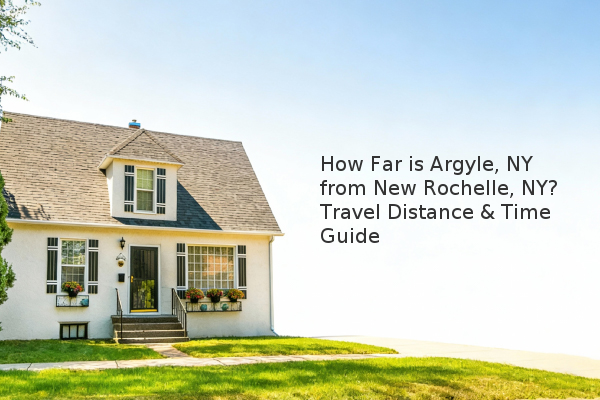
The driving distance from New Rochelle, NY, to Argyle, NY, is approximately 200 miles, with a typical travel time of 3 hours and 30 minutes without significant traffic. This journey takes you from a bustling Westchester County suburb to a quiet, rural town in Washington County, primarily via major interstate highways. For anyone considering this trip for real estate purposes, such as a relocation or property investment, understanding the travel logistics is a critical first step.
The most efficient route relies heavily on the New York State Thruway (I-87). You would begin by taking I-95 briefly to connect to I-87 North. You will stay on I-87 North, also known as the Governor Thomas E. Dewey Thruway, for the majority of the journey. After passing Albany, you will exit onto I-88 East toward Troy. From there, you will transition onto NY-29 East, which leads directly into the town of Argyle. This route is well-maintained and offers numerous service plazas for rest stops. It is important to budget for tolls, especially on the New York State Thruway, and having an EZ-Pass transponder can streamline your travel.
The primary factors affecting your travel time are traffic conditions around the New York City metropolitan area and construction zones, particularly near Albany. While the route is generally straightforward, using a real-time navigation app before and during your trip is highly recommended to avoid unexpected delays. For a smooth journey, planning to travel outside of peak commuter hours—early in the morning or later in the evening—can help you achieve the estimated 3.5-hour drive time.
While driving offers the most direct and flexible travel method, limited public transportation options exist. There is no single train or bus route that connects these two specific points directly. A multi-step public transit journey would likely involve taking a Metro-North Railroad train from New Rochelle to Grand Central Terminal, then a subway or taxi to Penn Station, followed by an Amtrak train to Albany or Saratoga Springs. From there, you would need to arrange for a taxi or rideshare service for the final 30-40 mile leg to Argyle.
This complex itinerary could take 5 to 7 hours or more, making it significantly less practical than driving for most travelers, especially those looking to tour properties or move belongings. The lack of seamless connectivity highlights the necessity of a personal vehicle when traveling between these two locations. For real estate buyers or investors, the reliance on a car is a key lifestyle consideration when evaluating a move from a transit-rich suburb like New Rochelle to a more rural area like Argyle.
The considerable distance between these two towns represents a significant lifestyle shift. New Rochelle offers a fast-paced, suburban environment with easy access to New York City, while Argyle provides a quiet, rural setting. For a daily commute, the nearly 200-mile distance is not feasible. This move would be considered a relocation, not a commute. This distinction is crucial for real estate planning, as it affects employment, school districts, and access to amenities.
| Travel Aspect | New Rochelle to Argyle |
|---|---|
| Driving Distance | ~200 miles |
| Estimated Drive Time | 3.5 hours (no traffic) |
| Primary Route | I-87 North (NY Thruway) |
| Real Estate Context | Relocation, not a daily commute |
The real estate markets are also vastly different. According to recent assessments, New Rochelle features a higher-density, more competitive market with property prices reflecting its proximity to NYC. In contrast, Argyle's market typically involves larger plots of land, single-family homes, and a lower overall cost of living. Understanding this travel link is the first step in evaluating the broader implications of such a move.
In summary, the journey from New Rochelle to Argyle is a substantial one requiring careful planning. The 200-mile drive is the most practical option, taking over three hours. This distance fundamentally changes the real estate calculus, moving from a suburban purchase to a full relocation. When considering such a move, factor in travel costs, the necessity of a vehicle, and the profound lifestyle differences between these two distinct New York communities.