Browse

Log in / Register
 Share
Share
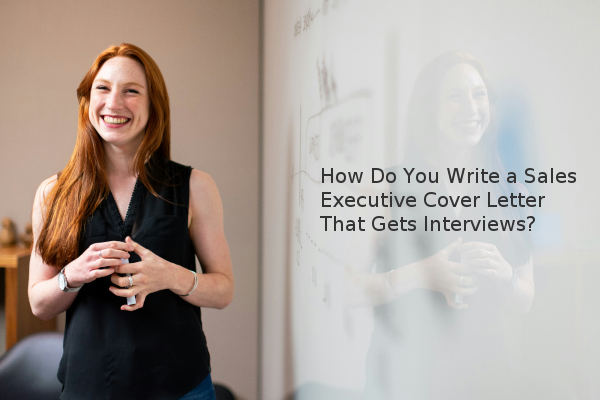
A well-crafted sales executive cover letter is not just a formality; it's your first sales pitch. The most effective letters directly connect your quantifiable achievements to the employer's needs, using the document itself to demonstrate your core sales skills. Based on our assessment experience, a strategic cover letter can significantly increase your chances of securing an interview by showcasing your communication prowess and understanding of the client—in this case, the hiring manager.
Begin by establishing a professional framework. Use a standard word processor and select a clean, readable font like Arial or Calibri at a 10-12 point size. Your goal is to create a visually appealing, single-page document that is easy to scan. If formatting is a concern, consider using a template from a reputable source like ok.com to ensure consistency. The structure should mirror a formal business letter, including your contact information, the date, the employer's details, a professional salutation, the body, and a formal closing. This attention to detail immediately signals professionalism.
The content of your cover letter must be a strategic narrative, not a repetition of your CV. Start by addressing the hiring manager by name if possible; if not, "Dear Hiring Manager" is a suitable alternative. Your opening paragraph must be powerful: state the specific sales executive role you are applying for and immediately hook the reader with a compelling reason for your application, such as a notable achievement relevant to their industry. For example: "I am writing to express my enthusiastic interest in the Senior Sales Executive position at [Company Name], where my proven track record of increasing regional sales by over 20% annually aligns directly with your expansion goals."
This is the core of your sales pitch. Use the body paragraphs to highlight skills directly mentioned in the job description. For a sales executive, these often include:
Crucially, don't just list skills—prove them with quantifiable results. Instead of saying "improved sales," specify "implemented a new CRM strategy that increased client retention by 15% and boosted Q3 revenue by $50,000." Quantifying your achievements provides tangible evidence of your value. Furthermore, sprinkling in relevant keywords from the job description can help your application perform well in an Applicant Tracking System (ATS), the software many companies use to screen candidates initially.
Your concluding paragraph should thank the reader, succinctly restate your interest, and include a clear call-to-action (CTA), such as, "I am eager to discuss how my sales strategies can contribute to your team's targets and am available for an interview at your earliest convenience." After drafting, the most critical step is proofreading. A single typo can undermine your message of being detail-oriented. Read the letter aloud or use a grammar tool to catch errors. Finally, ensure your cover letter and CV have consistent formatting and contact information to present a unified, professional application package.
To maximize your impact, focus on tailoring each letter to the specific role, quantifying your achievements with hard data, and meticulously proofreading to ensure error-free communication. These steps, based on common hiring manager feedback, transform a standard cover letter into a powerful tool for landing your next sales executive interview.
Please note that none of the companies, institutions, or organisations mentioned in this article are affiliated with ok.com.