Browse

Log in / Register
 Share
Share
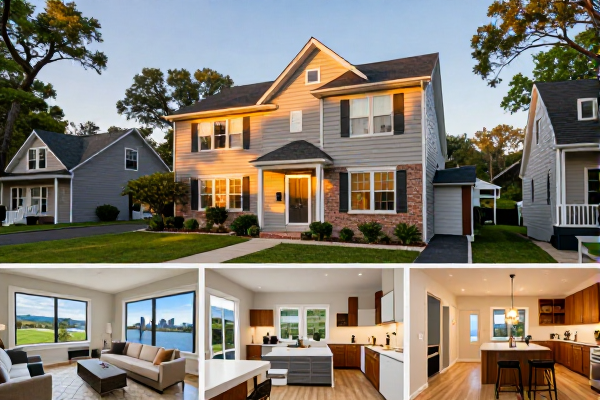
The Potomac River's depth is not a single figure but varies dramatically, from a few feet near its source to over 100 feet in its deepest channel. For homeowners and prospective buyers, understanding this variability is critical, as the river's depth directly influences property value, recreational access, and flood insurance requirements. This guide provides a data-driven overview of the Potomac's depth to inform your real estate decisions.
The Potomac River stretches approximately 405 miles from the Allegheny Mountains to the Chesapeake Bay, with its depth changing significantly along the way. It is not a uniformly deep body of water. In its upper reaches, such as near Washington, D.C., the river is relatively shallow, with an average depth ranging from 10 to 20 feet. However, the navigation channel, which is maintained by the U.S. Army Corps of Engineers, is dredged to a depth of about 24 feet to accommodate commercial and recreational boat traffic. The deepest point in the entire river is known as "The Hole," located just below the Route 301 bridge, where it plunges to over 100 feet. This variance means that a property advertised as "waterfront" in one area may offer deep-water access for large vessels, while another may only be suitable for canoes or kayaks.
When evaluating a property, it's essential to distinguish between the river's general depth and the depth at the specific property's shoreline. A property's assessed valuation can be significantly higher if it includes a private deep-water dock. Factors such as sedimentation and seasonal water levels can also cause fluctuations. For accurate information, prospective buyers should consult a recent topographic survey or hydrographic map of the exact parcel, as general averages can be misleading for individual property assessment.
The depth of the water adjacent to a property is a primary driver of its value. Deep-water access, typically defined as a depth of 6 feet or more at mean low water, is highly desirable. This allows for the installation of a dock capable of berthing sizable sailboats and motor yachts, a key amenity for many buyers. Properties with this feature often command a premium. Conversely, a shallow shoreline limits recreational use and may require expensive dredging permits and operations to achieve navigable depth, which can be a complex process regulated by state and federal agencies.
Beyond recreational use, depth influences flood risk assessment. Properties in areas with a shallow, wide river basin may be subject to different flood zone designations compared to those along deep, narrow sections. This, in turn, affects mortgage lending requirements and the cost of flood insurance, which is a separate policy from standard homeowners insurance. Lenders often mandate flood insurance for properties in high-risk zones, and premiums are calculated based on this risk. A property's elevation relative to the river's stage is a more critical factor than the river's depth alone, but the two are interconnected in the overall hydrological profile.

For anyone considering a purchase along the Potomac, due diligence is paramount. Relying on a seller's description of "deep water access" is insufficient. Key steps include:
Prospective buyers should always commission independent inspections and consult with local real estate professionals who specialize in waterfront properties to navigate these complex considerations effectively.