Browse

Log in / Register
 Share
Share
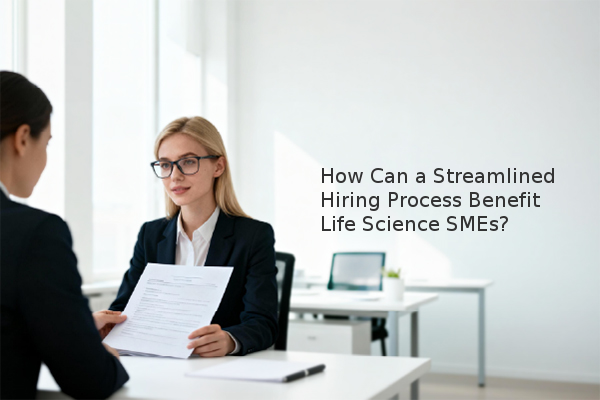
For Life Science SMEs, a streamlined hiring process is not just an advantage—it's a necessity for competing against larger players for top talent. By focusing on transparency, efficiency, and a positive candidate experience, smaller companies can significantly improve their offer acceptance rates. Based on our assessment experience, an optimal process of three-to-five steps, completed within two to three weeks, is key to success in a tight talent market.
A streamlined hiring process is an efficient, well-defined sequence of steps designed to evaluate candidates thoroughly without unnecessary delays. In the competitive Life Sciences sector, where candidates often have multiple options, the speed and quality of your hiring journey can be the deciding factor. Steven Houben, Executive Director at ok.com, describes it as "the crucial element" in securing in-demand professionals today. The goal is to balance depth with agility, allowing both the company and the candidate to gather essential information to make an informed decision.
Larger corporations may withstand a slow hiring process due to their brand recognition and resources. For SMEs, a lengthy, unclear process poses a significant risk of losing the best candidates to more agile competitors. Candidate experience is paramount. A smooth, respectful process signals that your company is professional, organized, and values people's time—a powerful message that enhances your employer brand. This is especially important for SMEs building their presence in the US market or competing for specialists in areas like oncology or clinical research.
The table below outlines the risks of a slow process versus the benefits of a streamlined one:
| Slow, Unstructured Process | Streamlined, Efficient Process |
|---|---|
| Top candidates accept other offers | Increased offer acceptance rates |
| Negative word-of-mouth damages employer brand | Enhanced reputation as an employer of choice |
| Increased cost-per-hire and time-to-fill | Reduced time-to-fill critical roles |
| Hiring manager and team burnout | Improved efficiency for internal stakeholders |
Crafting an effective process requires intentionality. For most roles, a three-to-five step process is optimal. This might include an initial screening call, a meeting with the hiring manager, and a final interview with key stakeholders. For science-based roles, this may be supplemented with a structured interview—a standardized method where each candidate is asked the same set of job-relevant questions—or a presentation on past work.
Daniel Ferzoco, Associate Director at ok.com, provides a real-world example: "We partnered with a startup hiring oncology representatives. Their process involved three hour-long interviews with key decision-makers, condensed into a two-week timeline. Candidates appreciated the agility." The key is to be up-front about the stages and timeline from the outset, managing expectations for a positive experience.
Beyond the process itself, several strategies are vital for Life Science SMEs.
To successfully hire for your Life Science SME, focus on a transparent, multi-step process, communicate a compelling mission, offer competitive compensation, and maintain high engagement throughout. For many companies, partnering with an expert recruitment agency can provide the structure and market insight needed to implement these strategies effectively and secure the specialized talent required for growth.