Browse

Log in / Register
 Share

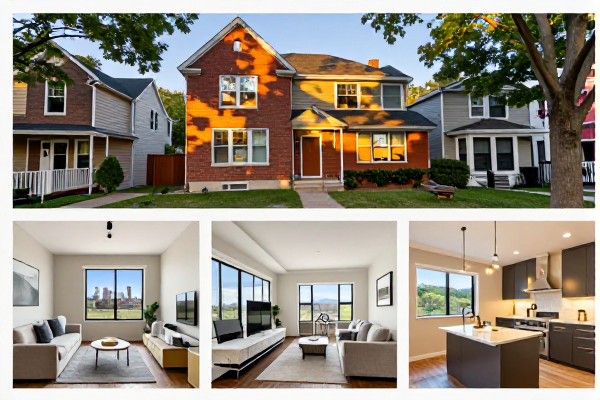
Determining your home's current market value is the critical first step before selling. While an official appraisal is necessary for the final sale, an automated valuation model (AVM) like the Zestimate provides a fast, free starting point for estimating your home's worth. Based on our experience assessment, these tools are generally accurate for on-market homes, with a median error rate of just 1.9%. However, their precision depends heavily on local data availability, and homeowners can take specific steps to improve their estimate's accuracy before listing their property.
An automated valuation model (AVM) is a computer-driven algorithm that analyzes vast amounts of data to estimate a property's market value. These models typically pull from public property records, recent sales of comparable homes (comps), tax assessments, and market trends. It is important to understand that an AVM is not a formal appraisal but a useful tool for initial research and planning. The Zestimate is one of the most widely recognized AVMs in the U.S., covering over 100 million properties.
Key data points an AVM considers include:
The accuracy of an AVM can vary significantly. For homes actively listed for sale, the median error rate is typically quite low, often around 2%. This means that for half of the on-market homes, the estimate is within 2% of the final sale price. For homes not currently on the market (off-market properties), the median error rate is higher, often around 5-7%, because there is less immediate, verified data available.
The primary factor influencing accuracy is the quality and quantity of data in a specific geographic area. Counties with detailed and frequently updated digital public records will yield more reliable AVM estimates than areas where data is scarce. It is crucial to view any AVM as a starting point and not a definitive valuation.
If your automated valuation seems too high or too low, you can take proactive steps to refine it. Since the algorithm relies on data, correcting errors or adding missing information can lead to a more accurate figure.
Additionally, remember that AVMs respond to broader market trends and seasonal shifts, so fluctuations can occur without any changes to your specific property.
An AVM gives you a preliminary number, but a successful sale requires deeper planning. After getting an estimate, consider these next steps:
An automated valuation model is a powerful tool for setting initial expectations, but it should be supplemented with a professional Comparative Market Analysis and a clear understanding of your net proceeds to make a fully informed decision about selling your home.