Browse

Log in / Register
 Share
Share
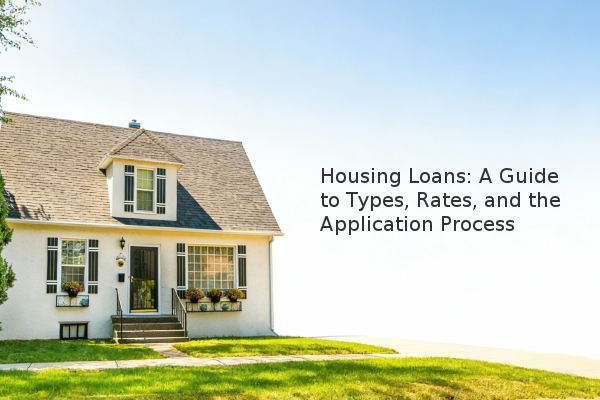
Navigating the world of housing loans, commonly known as mortgages, is a critical step in the home buying process. This guide provides a clear overview of the main types of home loans, how interest rates are determined, and the essential steps for a successful application. Understanding these fundamentals can empower you to make informed financial decisions and secure financing that aligns with your long-term goals.
The first decision for most borrowers is selecting the right type of mortgage. The two primary categories are fixed-rate and adjustable-rate mortgages. A Fixed-Rate Mortgage offers a consistent interest rate and monthly payment for the entire loan term, typically 15 or 30 years. This stability makes budgeting predictable, shielding you from future interest rate increases. Conversely, an Adjustable-Rate Mortgage (ARM) starts with a fixed rate for an initial period (e.g., 5, 7, or 10 years), after which the rate adjusts periodically based on a specific financial index. ARMs often begin with lower rates than fixed mortgages but carry the risk of payment increases later.
Other common loan types include government-backed options. FHA loans, insured by the Federal Housing Administration, are popular among first-time buyers due to their lower down payment requirements (as low as 3.5%) and more flexible credit score criteria. VA loans, guaranteed by the Department of Veterans Affairs, offer significant benefits to eligible veterans, active-duty service members, and their families, often requiring zero down payment. For high-cost housing markets, Jumbo loans are used to finance properties that exceed the conforming loan limits set by the Federal Housing Finance Agency.
Mortgage interest rates are not set arbitrarily; they are influenced by a combination of macroeconomic factors and individual borrower qualifications. On a national level, rates are closely tied to the bond market, particularly the yield on 10-year Treasury notes. They are also influenced by the Federal Reserve's monetary policy, though the Fed does not directly set mortgage rates. When the economy is strong, rates tend to rise to curb inflation, while they often fall during economic uncertainty to stimulate borrowing.
On a personal level, your financial profile has a direct impact on the rate you're offered. Lenders assess your credit score, which is a numerical representation of your creditworthiness. Higher scores typically secure lower interest rates. Your debt-to-income ratio (DTI), which compares your monthly debt payments to your gross monthly income, is another critical factor. A lower DTI signals to lenders that you can comfortably manage additional debt. Finally, the size of your down payment affects your rate; a larger down payment often results in a more favorable rate and helps you avoid private mortgage insurance (PMI).
| Credit Score Range | Typical Impact on Mortgage Rate |
|---|---|
| 760+ | Excellent (Best available rates) |
| 700-759 | Good (Favorable rates) |
| 620-699 | Fair (Higher rates) |
| Below 620 | Subprime (May have difficulty qualifying) |
The mortgage application process, while detailed, is straightforward when you are prepared. It begins with getting pre-approved. A pre-approval involves submitting financial documents (e.g., W-2s, pay stubs, bank statements) to a lender for a preliminary review. The lender then issues a letter stating the loan amount you are likely qualified for, strengthening your position when making an offer on a home.
Once your offer is accepted, you will formally apply for the loan. The lender will then initiate the underwriting process, a thorough verification of your finances and the property's value. This step includes a home appraisal, an independent assessment to ensure the property's value supports the loan amount. The underwriter will approve the loan once all conditions are met. The final step is closing, where you sign the official loan documents, pay closing costs, and receive the keys to your new home.
To improve your chances of approval, focus on strengthening your credit profile, saving for a substantial down payment, and maintaining stable employment. Always compare loan estimates from multiple lenders to ensure you are getting the most competitive terms. By understanding the types of housing loans, the factors affecting rates, and the application timeline, you can approach one of life's largest financial decisions with greater confidence and clarity.