Browse

Log in / Register
 Share
Share
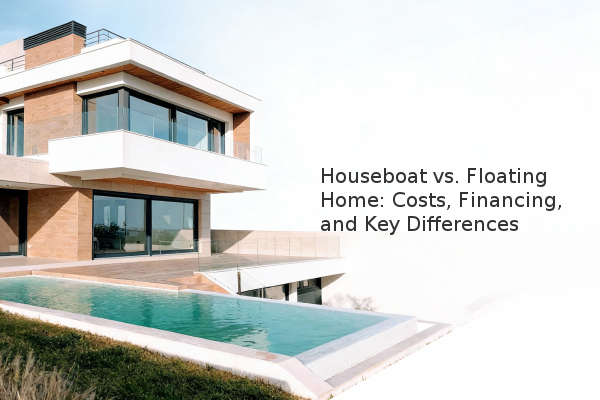
For those drawn to a waterfront lifestyle, purchasing a houseboat or floating home presents a unique alternative to traditional land-based housing. The core difference is mobility: a houseboat is a motorized vessel designed to be moved, while a floating home is a permanent residence fixed to a dock and connected to utilities. This fundamental distinction impacts everything from financing and ownership costs to daily living. Based on current market assessments, prices can range from under $100,000 for a basic houseboat to over $3 million for a luxury floating home.
While often used interchangeably, "houseboat" and "floating home" describe distinct property types. A houseboat is equipped with a motor, similar to a recreational vehicle (RV) on water. It can be untied from its mooring and navigated to new locations. In contrast, a floating home is a stationary structure, much like a traditional condominium or "sticks-and-bricks" home, but built on a floating platform. It is permanently connected to municipal sewer, water, and electrical services via the dock.
A simple way to determine the type is to ask if it has a built-in motor. If the answer is yes, it is a houseboat. If not, it is a floating home. These aquatic residences are popular in specific U.S. regions, including Washington, Oregon, Florida, and California.
The purchase price is highly dependent on size, location, condition, and amenities. However, the initial cost is just one part of the financial picture. Owners must also budget for ongoing fees, similar to homeowners association (HOA) dues for condos.
The table below illustrates sample costs based on recent expert assessments:
| Location | Property Type | Size / Description | Estimated Cost |
|---|---|---|---|
| Sausalito, CA | Floating Home | 2-bed, 2-bath, deep water | ~$1.4 million |
| Sausalito, CA | Floating Home | Larger, luxury model | Up to $3.2 million |
| Sausalito, CA | Floating Home | Smaller footprint | ~$600,000 |
| Tampa, FL | Houseboat/Floating Home | Basic to high-end | $100,000 - $1 million+ |
| Tampa, FL | Houseboat | 50' x 16', two-story | ~$350,000 |
Beyond the purchase price, owners face monthly moorage fees (for houseboats) or HOA dues (for floating homes) to cover dock maintenance and slip access. These can range from under $100 to over $1,000 monthly. Specialized insurance and potential sales tax on a houseboat purchase are additional critical costs to factor into your budget.
Financing is a significant hurdle, and the process differs greatly between the two property types.
Floating homes are considered real property, but they are ineligible for government-backed loans like FHA or VA loans. Furthermore, because loans for floating homes cannot be sold to Fannie Mae or Freddie Mac, few traditional lenders offer them. This often results in stringent requirements, such as a minimum 20% down payment. A potential solution is to negotiate seller financing, where the seller acts as the bank for a set period.
Houseboats, classified as personal property, are financed more like boats or RVs. Loans are typically shorter-term and may come with higher interest rates. It is also important to note that houseboats, unlike traditional real estate, tend to depreciate in value over time.
A professional inspection is non-negotiable. For any water-based home, this includes a specialized marine inspection. This will likely involve hiring a diver to examine the hull of a houseboat or the flotation system (often barrels or foam-filled concrete pontoons) beneath a floating home. Lenders will typically require a float certificate to confirm the structure's seaworthiness before approving a loan. While floating homes must adhere to local building codes, houseboats may have more flexibility in their construction standards.
Pros:
Cons:
Before purchasing, spend time on the water to ensure you are comfortable with the motion and environment. Thoroughly research local rental ordinances if you plan to use the property for income generation, as rules can be restrictive. Due to the niche nature of these properties, working with a real estate agent experienced in waterfront homes is highly recommended.