Browse

Log in / Register
 Share
Share
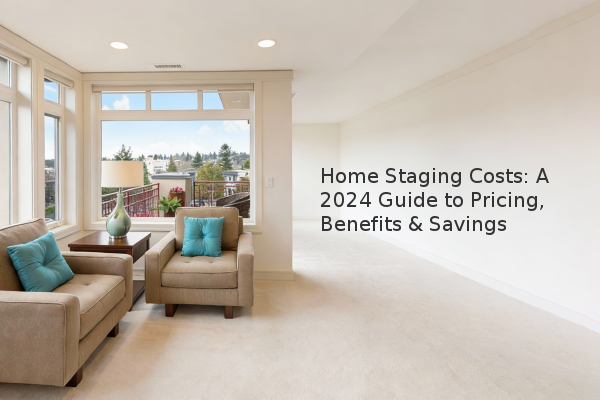
The average cost to stage a home in the United States is $1,800, with most projects ranging from $600 to $4,000. According to the National Association of Realtors (NAR), 81% of buyers' agents state that staging makes it easier for clients to visualize a property as their future home, a key factor in generating offers. For sellers, this investment can significantly impact the final sale price; a 2024 study by the Real Estate Staging Association (RESA) found that staged homes sold for an average of $70,000 over the listing price. This guide breaks down the costs, proves the value, and outlines practical strategies to maximize your return on investment while managing expenses.
Home staging costs are not one-size-fits-all. The final price depends on several variables, including your home's square footage, whether it is vacant or occupied, the number of rooms being staged, and your local market. The national average of $1,800 covers a typical project. For a more precise estimate, costs can be broken down into specific services:
| Service | Typical Cost Range | Details |
|---|---|---|
| Initial Consultation | $150 - $600 | A two-hour meeting where a professional stager assesses your home and provides a project quote. |
| Room-by-Room Staging | $300 - $700 per room | The cost increases with each additional room staged. |
| Hourly Rate | $25 - $150 per hour | Some stagers charge by the hour instead of a flat fee. |
| Flat Project Fee | $800 - $1,000+ | A common pricing model that may exclude furniture rental. |
| Furniture Rental | $500 - $2,000+ per month | Crucial for vacant homes; cost scales with the number of rooms and furniture quality. |
| Decluttering & Rearranging | ~$800 flat fee | Using your existing furniture to optimize the space, which is more budget-friendly. |
Additional costs may be recommended for home maintenance projects like painting walls a neutral color, updating light fixtures, or hiring a professional cleaning service to ensure the property is in show-ready condition.
The primary goal of home staging is to enhance a property's appeal to the broadest possible audience. The data suggests it is highly effective. The NAR statistic that 81% of buyers' agents found staging helpful underscores its power in creating an emotional connection. When buyers can easily imagine their life in a space, they are more likely to make a competitive offer.
Ann Waters of Naples Home Staging emphasizes that first impressions are critical: "The first seven seconds a buyer spends in your home are critical. Buyers form an impression that affects how they view the rest of the home." Staging creates that positive "wow" factor, which can lead to a quicker sale and potentially a higher final sale price, as indicated by the RESA study. While not a guarantee, staging is a powerful marketing tool that statistically improves a home's marketability.
A full-scale staging project may not be feasible for every budget. Fortunately, there are several strategies to reduce costs while still reaping the benefits.
Consult with your real estate agent for budget-friendly advice. Based on our experience assessment, a good agent can recommend local stagers and suggest low-cost, high-impact improvements like a fresh coat of paint or minor repairs that maximize your staging efforts.
Home staging is an investment in your home's market presentation. To ensure you get the best value:
The key takeaway is that home staging is a strategic marketing expense designed to attract more buyers and potentially increase your sale price. By understanding the costs and implementing smart savings strategies, you can make an informed decision that aligns with your selling goals.