Browse

Log in / Register
 Share
Share
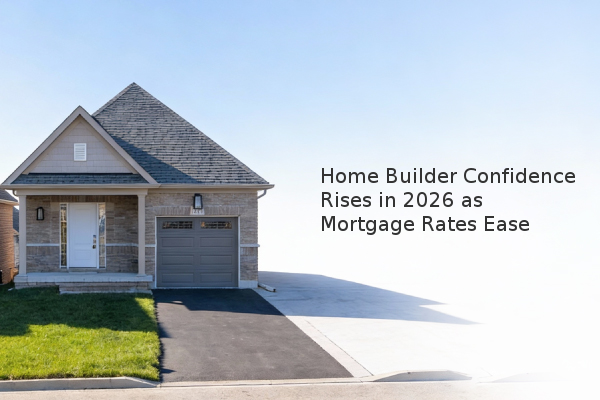
Home builder confidence in the United States has reached its highest point in six months, signaling a potential shift in the new construction market for 2026. The key driver behind this cautious optimism is the recent decline in mortgage rates, which has improved affordability for prospective homebuyers. According to the latest industry data, a leading sentiment index rose significantly, with builders anticipating further improvement if the Federal Reserve continues its policy of monetary easing. However, this optimism is tempered by persistent challenges, including new tariffs on imported building materials and high labor costs, which continue to pressure profit margins and construction timelines.
What is the current state of home builder sentiment?
The National Association of Home Builders (NAHB) / Wells Fargo Housing Market Index (HMI), a key measure of builder confidence, showed a notable increase recently. The overall index climbed to 37, a five-point gain from the previous month. More importantly, the component measuring sales expectations for the next six months surged nine points to 54. Any reading above 50 indicates that more builders view market conditions as favorable rather than poor. This forward-looking sub-index is now at its highest level since the beginning of the year, suggesting that builders are preparing for a more active sales environment in the coming months. This data is particularly significant as it provides a timely snapshot of the market amid delays in other government housing data releases.
How are falling mortgage rates influencing the market?
The recent downward trend in mortgage rates is the primary factor behind the improved builder outlook. After a prolonged period of elevated rates that sidelined many potential buyers, average rates have recently hovered near more accessible levels. This decline began in anticipation of the Federal Reserve's shift in monetary policy. Based on our experience assessment, financial markets are currently expecting additional rate cuts, which would further reduce borrowing costs for home loans. Lower mortgage rates directly improve housing affordability, making it feasible for a larger pool of buyers to qualify for mortgages and consider purchasing a new home. Despite this encouraging sign, industry leaders caution that the market recovery is still in its early stages, with many buyers remaining hesitant.
What challenges are builders still facing?
Even with improving demand, builders contend with significant supply-side cost pressures. High costs for materials and skilled labor persist. A new challenge emerged recently with the implementation of tariffs on key imported goods. These include a 10% tariff on all timber and lumber imports and a 25% duty on cabinets and furniture, with these rates scheduled to increase substantially in the new year. These added costs threaten to offset the benefits of lower mortgage rates by increasing the final price of a new home. Builders are navigating this difficult environment by employing various strategies to attract buyers without completely eroding their profits.
What strategies are builders using to attract buyers?
To stimulate sales in a market where demand is still firming, builders are relying on two main tactics: price reductions and sales incentives. Recent data indicates that 38% of builders have reported cutting prices, with the average price reduction increasing to 6%. Furthermore, a significant majority—65%—are offering sales incentives. These incentives often include mortgage rate buydowns, where the builder pays to temporarily reduce the buyer's interest rate, and assistance with closing costs. These strategies effectively lower the overall financial barrier for the buyer, making a new home purchase more attainable even before any further decline in market mortgage rates.
How does sentiment vary across different US regions?
Builder confidence is not uniform across the country, reflecting diverse local economic conditions. The regional breakdown of the HMI shows a mixed picture:
What does this mean for new construction supply?
The rise in builder sentiment is a positive indicator for the future supply of new homes. Industry analysis suggests that the recent increase in the confidence index correlates with an approximate 3% increase in single-family permit totals on a seasonally adjusted annual basis. A boost in building permits is a crucial first step in the construction process and would be welcome news after a period of sustained weakness. Prior to this, permit activity had been declining for several consecutive months, marking the longest such streak since the 2008 housing crisis, as builders faced a combination of high costs, tariff uncertainty, and muted demand.
The key takeaway for the housing market in 2026 is that builder confidence is cautiously rising on the prospect of lower borrowing costs. While this is a positive development, the market recovery remains fragile. Persistent supply-chain cost pressures and new tariffs present ongoing challenges that could keep new home prices elevated. For buyers, the use of sales incentives by builders may present opportunities, but the overall market continues to await more sustained improvements in affordability.