Browse

Log in / Register
 Share
Share
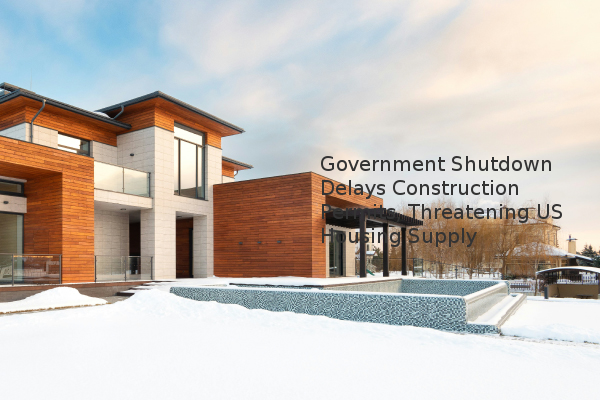
A prolonged federal government shutdown directly threatens to worsen America's housing shortage by creating massive bottlenecks for essential construction permits. With key agencies like the U.S. Army Corps of Engineers and the Environmental Protection Agency (EPA) operating at minimal capacity, reviews for Individual Permits and environmental assessments are stalled. This delay risks pushing project timelines back by months, increasing costs for builders, and ultimately making homes less affordable for buyers, particularly in high-growth states.
The environmental review process for new construction involves a complex web of federal agencies. These include the Environmental Protection Agency (EPA), the Army Corps of Engineers, and the Fish and Wildlife Service. Even if a permit is issued by a local jurisdiction, federal input is often required before work can begin. During a shutdown, a critical bottleneck forms. As Russel Riggs, a senior regulatory representative, explains, "If the Feds can’t provide input, then [states and locals] are kind of dead in the water as well." With nearly 90% of the EPA staff furloughed, most federal permit reviews and inspections are on pause, directly halting progress on countless projects.
The impact varies significantly by project size. Smaller projects impacting less than half an acre typically proceed under Nationwide Permits (NWPs), which are general authorizations for activities with minimal environmental impact. However, crossing that half-acre threshold triggers a requirement for an Individual Permit. This process is far more complex, involving multiple agencies, public comment periods, and a timeline that can stretch for months. The current shutdown halts this already lengthy process entirely. Furthermore, the shutdown threatens the future pipeline of all projects, as the critical rulemaking process to renew the NWPs before their March 2026 expiration date is also delayed.
Fast-growing states that account for a disproportionate share of new housing construction will feel the effects of permit delays first and most severely. Based on industry data, Florida, Texas, North Carolina, and California are particularly at risk. These four states accounted for over 40% of all new-home permits issued in 2024. Any delay in their construction pipelines has an outsized impact on the national housing supply, which is already short an estimated 4 million homes.
The table below illustrates the potential impact on these key states:
| State | Share of 2024 New-Home Permits | Vulnerability to Shutdown Delays |
|---|---|---|
| Florida | High | Severe (Heavy reliance on federal permits for wetlands) |
| Texas | High | High (Rapid growth, large-scale developments) |
| North Carolina | High | High (Significant new construction activity) |
| California | High | Moderate to High (Complex regulatory environment) |
The immediate effect is a slowdown in new construction, but the long-term consequence is likely higher costs for homebuyers. Permit delays do not pause other expenses for builders. Land-carrying costs (ongoing expenses for holding undeveloped land) and interest on construction loans continue to accrue. These increased development costs are often passed down to the consumer. As Jake Krimmel, a senior economist, notes, "In the longer run... these increased development costs could be passed on to homebuyers too." This creates a dual challenge: fewer new homes are built, and those that are completed become more expensive, exacerbating existing affordability crises.
While builder sentiment showed a slight improvement in October, the industry remains on fragile ground. The shutdown introduces a new layer of uncertainty that undermines confidence among builders, lenders, and buyers. For a housing market already struggling with high mortgage rates and limited inventory, federal permit delays act as a significant drag.
The key takeaway is that any delay in the permitting process has a ripple effect. It slows construction, increases costs for developers, and reduces the number of affordable homes available to buyers. A swift resolution to the government shutdown is critical to preventing a bad housing supply situation from becoming worse.