Browse

Log in / Register
 Share

Gene Hackman's $80 million estate, including his $3.8 million Santa Fe compound, is poised for distribution through a trust designating charitable organizations, following the deaths of the actor and his wife, Betsy Arakawa. The succession plan, detailed in wills filed in Santa Fe, New Mexico, highlights the use of a successor trustee and a trust for asset distribution, common tools in high-value estate planning. This analysis outlines the property's features, the legal process underway, and the unique renovation history of the Southwestern residence.
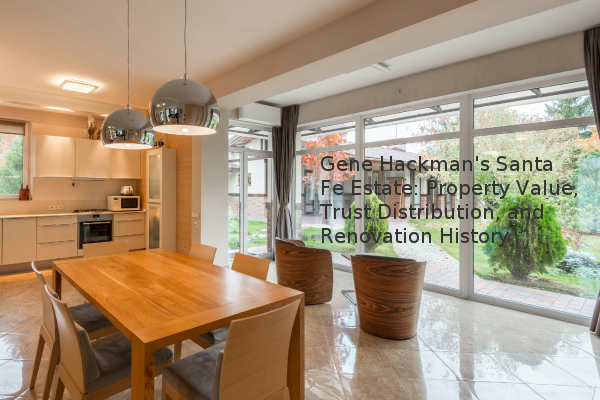
The primary asset in the estate is a 12-acre Santa Fe compound purchased by Hackman in the 1980s. The property, now valued at approximately $3.8 million, includes multiple structures. The main residence features at least four bedrooms, 360-degree mountain views, and a rustic design blending Santa Fe style with international influences. Hackman extensively renovated the home, working with architects from Studio Arquitectura to transform a 1950s block building into a personalized retreat. Key renovations included raising ceilings, adding French doors for natural light, and incorporating a "great-hall feeling" by removing walls. The property served as the couple's primary residence for over three decades, described by Hackman as a "haven" from Hollywood.
Based on available documentation, the distribution of Hackman's estate is being managed through a trust. A trust is a fiduciary arrangement that allows a third party, or trustee, to hold assets on behalf of beneficiaries. Hackman’s will reportedly named Betsy Arakawa as the successor trustee. Upon her death, the estate plan stipulated that her assets be directed to a trust for distributing to charitable organizations and settling medical debts. This approach is a standard method for managing asset distribution privately and according to specific wishes, bypassing the more public process of probate.
Gene Hackman was deeply involved in the property's renovation, preferring to "interpret what's already there" rather than demolish the existing structure. As reported by Architectural Digest in 1990, the architects noted the original building was "horrible" but had a well-placed foundation. The goal was to create a space that was "massive and cozy at the same time," not a purist recreation of pueblo architecture. Changes included tearing down blocking walls, adding three extra rooms, and sourcing furnishings from New York, Los Angeles, and Germany. Hackman and Arakawa focused on creating an informal, welcoming environment that contrasted with their other, more formal residences.
For individuals considering property investments or estate planning, the key takeaways are: