Browse

Log in / Register
 Share

For real estate investors seeking properties with unique business potential or conversion opportunities, former funeral homes present a distinct niche. These properties often feature large, open floor plans, significant square footage, and prime locations, making them viable for commercial, residential, or mixed-use development. Based on our experience assessment, the key to a successful investment lies in understanding zoning regulations, conducting thorough due diligence on the property's history, and accurately projecting renovation costs. The most critical factor is verifying local zoning laws to ensure your intended use is permitted.
The primary consideration extends beyond price. Investors must assess the property's condition, any specialized infrastructure (like embalming facilities that may require removal), and potential stigma that could affect resale or rental value. It is also essential to review the title insurance policy, which protects against ownership claims, for any unusual easements or restrictions. Furthermore, a professional inspection is non-negotiable to identify issues not apparent during a initial walkthrough. The investment appeal often hinges on the cost of renovations relative to the post-conversion property value in the local market.
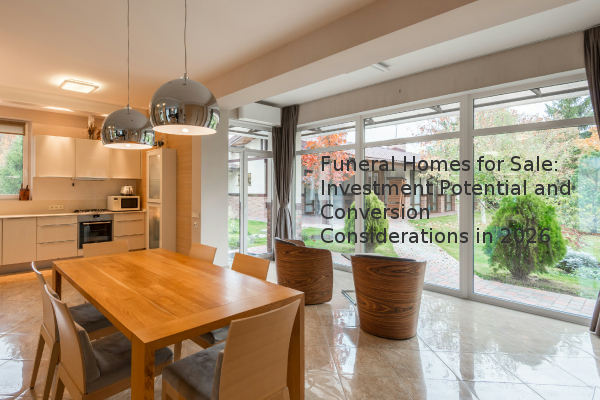
The adaptive reuse of a former funeral home is limited primarily by zoning and imagination. Common conversions include transforming the space into office suites, medical practices, art studios, multi-family apartments, or single-family residences. A property with a mixed-use zoning designation, which allows for both commercial and residential activities, offers the greatest flexibility. For example, a building with a commercial first floor and a residential upper unit can be maintained as-is. The large chapels and viewing rooms can be repurposed into open-concept living areas, event spaces, or commercial showrooms.
Location is a fundamental principle in real estate valuation, and it is no different for these unique properties. A funeral home in a densely populated, desirable urban neighborhood like Fort Greene, Brooklyn, will inherently have a higher value and different conversion opportunities than one in a rural area. The value is tied to the underlying land and the demographic and economic trends of the area. Proximity to other businesses, residential demand, and future development plans for the neighborhood all play a significant role in determining the long-term appreciation potential of the investment.
To make a informed decision, focus on these actionable steps:
Ultimately, the success of investing in a former funeral home depends on meticulous research, a clear vision for the property's future, and a realistic budget for its transformation.