Browse

Log in / Register
 Share
Share
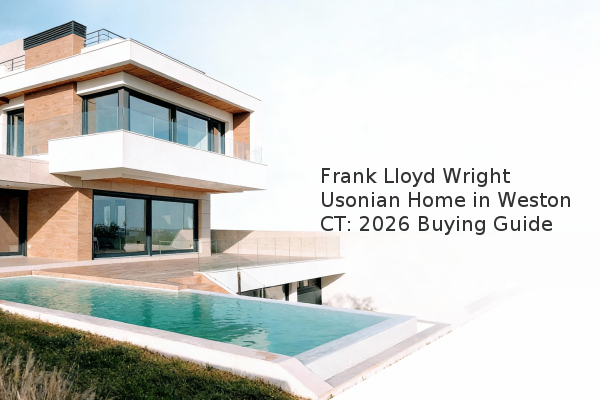
A meticulously preserved Usonian home in Weston, CT, designed by a Frank Lloyd Wright apprentice, offers a rare opportunity for a buyer seeking a landmark property. Listed for $1.45 million, this 1963-built residence retains its original character, including built-in furniture and custom details, following a sensitive restoration. This article provides a objective overview of the property's unique features and the specific considerations for a potential purchase in 2026.
The term Usonian refers to a style of moderately priced, single-story homes designed by Frank Lloyd Wright beginning in the 1930s. Wright envisioned these residences as a democratic alternative to traditional housing, emphasizing simplicity, integration with the natural landscape, and the use of native materials. Key characteristics often include open floor plans, floor-to-ceiling windows, and minimal storage space. This particular home in Weston is a prime example of the style, built by Allan Gelbin, a direct apprentice of Wright, as his personal residence and studio.
The current homeowners have undertaken a rigorous restoration since acquiring the property in 2004, focusing on preserving its historical integrity. Based on our experience assessment, their work reflects a commitment to authenticity. Key restoration efforts include:
This meticulous approach means the home offers an authentic experience, largely unchanged from its original 1963 condition, unlike many Usonian homes that have undergone significant alterations.
Situated on over two acres at the end of a shared driveway, the property provides a sense of privacy. Its floor-to-ceiling windows offer panoramic views of the surrounding trees and the adjacent river, creating an effect similar to being in a "tree house." The home's layout is bright and open, filled with natural light, and includes several pieces of original artwork. Its location combines seclusion with convenience, being approximately 75 minutes from New York City.
This property requires a buyer with a specific appreciation for architectural history. It is not a typical suburban home. The preservation of original features means modern expectations for ample storage or a garage are not met. The specialized nature of the design and its status as a historical artifact necessitate a buyer who values artistry over conventional amenities. For the right individual, it represents a well-preserved piece of American architectural history.
Purchasing a unique historical property like this Usonian home requires a careful evaluation of its preservation needs against your personal lifestyle. Its value lies in its authenticity, making it a niche but significant real estate opportunity in 2026.