Browse

Log in / Register
 Share
Share
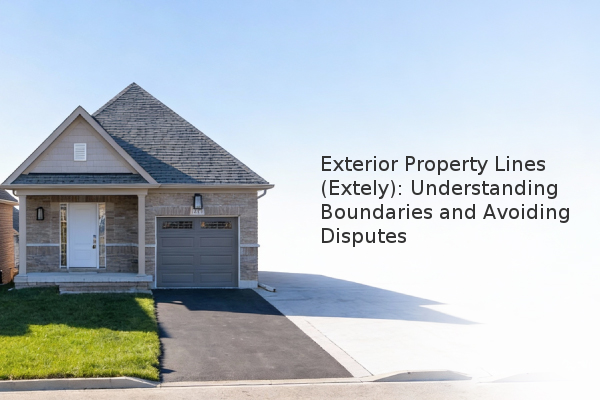
Understanding your property's exterior lines, or "extely," is the first step to preventing costly legal disputes with neighbors. Exterior property lines (extely) define the exact legal boundaries of a parcel of land. A clear grasp of these invisible lines is essential for any homeowner planning additions, installing fences, or landscaping. This guide will explain how to identify your extely and the legal frameworks that protect your property rights.
Exterior property lines (extely) are the legally defined boundaries that separate one parcel of real estate from another or from public land, such as a street or alley. These lines are not physically marked on the ground but are detailed in a property's legal description, which is found on the deed and the official plat map filed with the county recorder's office. Failing to respect these lines can lead to encroachments, where a structure like a shed or fence crosses onto a neighbor's property, potentially resulting in legal action.
You cannot rely on existing fences or landscaping to determine your extely, as they are often inaccurate. The most reliable method is to hire a professional land surveyor. A surveyor will conduct a precise measurement of your land and provide a survey plat, a detailed map that marks the exact corners and boundaries of your property. This document is crucial for obtaining building permits and is your best defense in a boundary dispute. Before any major project, investing in a new survey is a prudent step to avoid future complications.
Boundary disputes are a common source of conflict between neighbors. These often arise from:
Before you break ground on any project near your perceived property line, follow these steps:
In summary, proactively identifying your exterior property lines through a professional survey is a non-negotiable step for responsible homeownership. It protects your investment, prevents legal disputes, and ensures your improvement projects proceed smoothly. Always verify boundaries legally before building and maintain open communication with your neighbors to uphold positive community relations.