Browse

Log in / Register
 Share

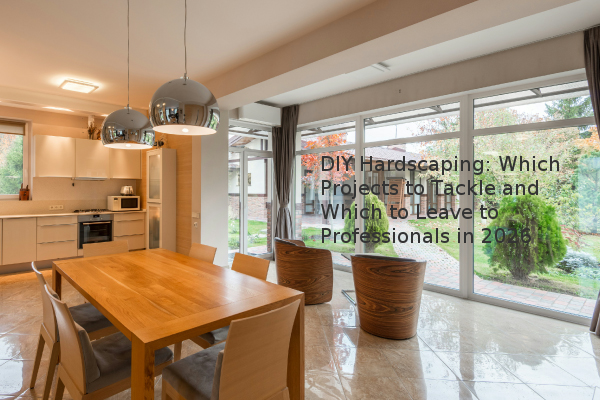
For homeowners considering a hardscaping project, the core decision is determining which tasks are feasible DIY endeavors and which require professional expertise to avoid costly errors and safety hazards. The most suitable DIY hardscaping projects are small-scale, non-structural elements like boulder placement, decorative edging, short paver pathways, and dry-stacked stone walls. In contrast, projects involving structural engineering, permits, or proximity to public spaces and water should be left to licensed landscapers and contractors. Attempting complex projects like large retaining walls or patios near water bodies without professional help can lead to significant property damage and personal injury.
Hardscaping refers to the non-living, manufactured elements of a landscape design, such as stone pathways, patios, walls, and pergolas. Before starting any project, accurately assessing its scope is critical. According to industry assessments, DIYers can typically manage projects covering up to 120 square feet on level ground. Beyond this size, factors like proper ground compaction, drainage, and leveling become exponentially more complex, increasing the risk of settling, cracking, or water pooling. Larger projects often also require permits and must adhere to local building codes, which professionals are trained to navigate.
For homeowners with basic DIY skills, certain projects offer a high-impact return with minimal risk.
1. Boulder Placement Boulders can serve as effective focal points in a garden, drawing attention to landscaping while masking less attractive areas. These large stones are available in various sizes and textures from garden centers. The installation process is straightforward: simply place them individually or in grouped arrangements. Since boulders are not structural and require no fixing, this project has a very low margin for error, making it an ideal starting point for DIY hardscaping.
2. Decorative Edging Decorative edging involves installing materials like brick, stone, or poly lumber to define borders along driveways, patios, or garden beds. Because it is purely aesthetic and not structural, it doesn't require heavy machinery. Homeowners can use wood, brick, concrete, plastic, or metal to create clean lines. The key is to ensure the edging material is securely anchored into the soil to prevent shifting over time.
3. Short Paver Walkways on Flat Ground Building a short paver or brick walkway is manageable if the ground is perfectly level. The critical steps are leveling and compacting the ground base before laying the pavers in a simple pattern. On a slope, however, grading and slippage prevention require professional expertise. Keeping the project small ensures the DIYer can maintain consistency in the base preparation, which is essential for longevity.
4. Dry-Stacked Stone Walls A dry-stacked stone wall is built without mortar, relying on the careful placement of stones for stability. This makes it more forgiving than mortared walls, as perfect leveling is not required. The process involves outlining the wall's footprint and stacking stones layer by layer. These walls are best suited for low, garden-height applications rather than tall, retaining structures.
Some hardscaping projects carry risks that far outweigh the potential savings of a DIY approach. Hiring a professional is strongly recommended for:
Planning is the most crucial phase of any hardscaping project. Always start by checking local municipal requirements for permits before breaking ground. For DIY tasks, invest time in proper base preparation, as this is the foundation of a durable installation. Most importantly, honestly assess your skill level and the project's complexity; hiring a professional for challenging projects is an investment in safety, quality, and your property's value. Mistakes in hardscaping can be very difficult and expensive to rectify later.