Browse

Log in / Register
 Share
Share
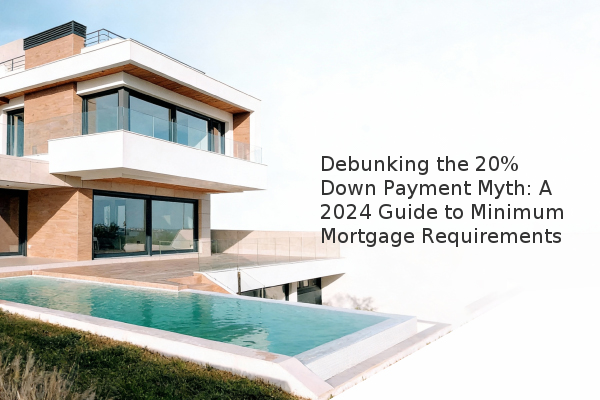
Saving a 20% down payment is not a strict requirement for most homebuyers. In 2024, data shows that only 52% of mortgage borrowers made a down payment of 20% or more. The minimum amount required is determined by your loan type and financial profile, with options as low as 0% for qualified borrowers. While a 20% down payment offers significant advantages, a smaller down payment can be a strategic move to enter the housing market sooner.
The required down payment is not a one-size-fits-all figure; it varies significantly based on the mortgage product you select. Private Mortgage Insurance (PMI), a policy that protects the lender if you default on the loan, is often required for conventional loans with less than 20% down. The following table outlines the standard minimums for common U.S. mortgage types.
| Loan Type | Typical Minimum Down Payment |
|---|---|
| Conventional Loan | 3% (for first-time buyers) / 5% (others) |
| FHA Loan | 3.5% (credit score ≥580) |
| VA Loan | 0% |
| USDA Loan | 0% |
| Jumbo Loan | 10-20% |
Conventional Loans As the most common mortgage type, conventional loans offer flexibility. While the standard minimum is 5%, first-time homebuyers or those in specific programs like HomeReady can qualify with just 3% down. For example, on a $500,000 home, a 3% down payment equals $15,000. However, any down payment below 20% will require you to pay PMI until you reach 20% equity in the home.
FHA Loans Backed by the Federal Housing Administration, FHA loans are designed for borrowers with lower credit scores. The minimum down payment is 3.5% for borrowers with a credit score of 580 or higher. These loans require both an upfront and an annual Mortgage Insurance Premium (MIP) for the entire loan term, though putting down 10% or more can reduce this long-term cost.
VA and USDA Loans These government-backed programs offer 100% financing, meaning no down payment is required. VA loans are for eligible veterans, service members, and their spouses, while USDA loans are for low-to-moderate-income buyers in designated rural areas. Although they avoid PMI, they have other fees, like a VA funding fee or a USDA guarantee fee, which can sometimes be reduced or waived with a larger down payment.
Jumbo Loans These are for loans that exceed the conforming loan limits set by Fannie Mae and Freddie Mac (e.g., $806,500 in most areas for 2025). Because they are riskier for lenders, down payment requirements are often higher, typically ranging from 10% to 20%. On a $900,000 home, a 10% down payment would be $90,000.
Deciding whether to put down 20% is a personal financial calculation. A smaller down payment gets you into a home faster, but a larger one improves your long-term financial position. Consider these key questions.
For those who can afford it, putting down 20% provides several compelling advantages.
The decision hinges on your personal timeline and financial health. While a 20% down payment offers clear financial benefits, modern mortgage programs make homeownership accessible with a much smaller initial investment. The optimal choice is the one that aligns with your home-buying goals without compromising your overall financial security.