Browse

Log in / Register
 Share
Share
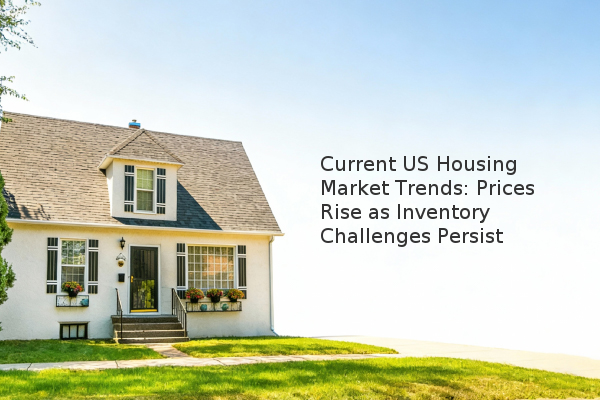
The US housing market continues to favor sellers in late 2026, with the median listing price rising annually amidst persistently tight inventory. Our latest analysis of the week's data reveals a 1.0% year-over-year increase in listing prices, while the number of homes for sale remains below last year's levels. New listings showed a slight uptick, and homes are selling slightly faster than this time last year. The core challenge remains a significant housing supply deficit, which is 41.8% below typical pre-pandemic levels, sustaining upward pressure on prices even as mortgage rates show signs of moderating. This combination of factors means affordability constraints are likely to persist for buyers in the immediate future.
The median US home listing price has grown by 1.0% compared to the same week last year. This continues a pattern of fairly flat or slightly positive annual growth observed since mid-summer. While prices are climbing, they are following a seasonal pattern similar to 2025, with typical seasonal declines expected in the fall. The median listing price, which is the middle point of all homes listed for sale (meaning half are priced higher and half are priced lower), is being supported by the limited number of properties available. Based on our experience assessment, the ongoing shortage of for-sale homes is the primary driver preventing more significant price corrections, despite higher financing costs.
New listings, a measure of homeowners putting their properties up for sale, increased by 0.6% from one year ago. This recent shift is notable because new listings had consistently registered below the previous year's levels since mid-2022. This previous trend was largely due to the mortgage rate lock-in effect, a situation where homeowners with existing mortgages at interest rates significantly below current market rates are disincentivized to sell and buy a new home, as it would mean taking on a much higher monthly payment. The slight resurgence in new sellers, while a positive sign, is not yet substantial enough to meaningfully alter the inventory landscape. A sustained lack of growth in new listings will likely continue to limit options for buyers and constrain sales volume in the coming months.
The supply of homes remains a critical issue. Active inventory declined slightly, lagging behind last year's levels by 0.2%. This marks the 20th consecutive week that inventory has been below the previous year's count. Although a seasonal buildup of inventory is underway, making this time of year relatively better for buyers, the market is still fundamentally undersupplied from a long-term perspective. To illustrate the scale of the deficit, the table below compares recent inventory levels to the pre-pandemic benchmark.
| Period | Active Inventory Level (Relative to Pre-Pandemic Average) |
|---|---|
| October 2026 | 41.8% below |
| Pre-Pandemic Baseline (2017-2019) | 0% (Baseline) |
This data underscores the deep and persistent nature of the housing supply shortage, which continues to be a defining feature of the market.
The pace of the market remains brisk. The typical home spent two fewer days on the market compared to the same week last year. This is only the fifth time since July 2022 that homes have sold faster than the prior year. The gap in time on market had narrowed over the summer as buyers became more selective, but this fall, the seasonal slowdown is happening at a much more gradual pace than is historically normal. This indicates that demand continues to outpace the available supply in many areas, leading to competitive conditions for well-priced homes.
In summary, the housing market remains competitive for buyers due to constrained inventory, which is propping up prices. For prospective buyers, being financially prepared to move quickly is essential. For homeowners considering selling, the current conditions present an opportunity, but it's crucial to have a realistic plan for your own subsequent purchase in a market with limited options. The upcoming inflation data and the Federal Reserve's policy response will be critical in determining the future direction of mortgage rates, which is the key variable that could eventually improve affordability.