Browse

Log in / Register
 Share
Share
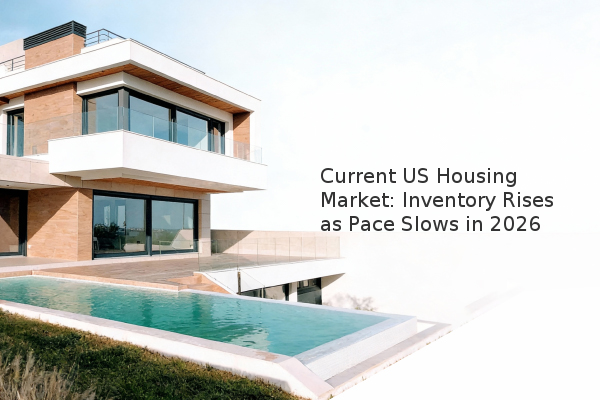
The US housing market in 2026 is characterized by a significant increase in available homes for sale compared to recent years, but a simultaneous slowdown in the pace of sales. This creates a complex environment where buyers have more choices and negotiating power, while sellers must adjust their pricing expectations. Key metrics indicate a 70% year-over-year increase in active listings, yet new sellers are entering the market at a slower rate. High home prices and mortgage rates continue to challenge buyer affordability, leading to homes staying on the market longer. This market represents a shift away from the frenetic pace of the previous decade and toward a more balanced, though still constrained, environment.
The growth in active inventory—the total number of homes listed for sale—is not driven by a surge of new sellers. Instead, it is primarily a result of homes taking longer to sell. Based on our experience assessment, the current high mortgage rate environment has cooled buyer demand, meaning properties accumulate over time rather than selling quickly. While inventory is up significantly from the lows of the early 2020s, it's crucial to understand that nationwide inventory levels remain more than 40% below pre-pandemic benchmarks. This underlying scarcity continues to provide a floor for home values, preventing a major price collapse despite the slowdown.
For buyers, the increased inventory offers more options and less competition for each property. This can translate into increased negotiating power, particularly for homes that have been on the market for several weeks. The share of sellers making price reductions is more than twice as large as it was during the peak seller's market, indicating a shift in leverage. For sellers, success requires realistic pricing from the outset. Homes are now taking an average of 23 extra days to sell compared to the same period last year. Sellers must be prepared for a longer marketing period and may need to be more responsive to buyer requests during negotiations.
Mortgage rates—the interest rate on a home loan—remain a critical factor. While they have retreated from their highest points, they are still roughly 2.5 percentage points higher than the record lows, directly impacting monthly payments and affordability. The Federal Reserve's ongoing focus on controlling inflation suggests that significant rate drops are unlikely in the near term. Regarding prices, the median listing price continues to show modest annual growth, but the rate of increase has slowed. This suggests a market in transition, where seller expectations are gradually aligning with the financial realities of the current buyer pool. Price growth is expected to be moderate throughout 2026.
| Market Metric | Change from Previous Year (2026) | Key Implication |
|---|---|---|
| Active Listings | +70% | More choices for buyers, less competition per home. |
| Median Listing Price | +7.9% | Price growth continues, but at a slower, more sustainable pace. |
| Days on Market | +23 days | Market pace has slowed significantly, favoring patient buyers. |
| New Listings | -13% | Fewer homeowners are choosing to sell, limiting inventory growth. |
Navigating this market requires a clear-eyed view of the new dynamics. For buyers, the key is to use budgeting tools to firmly establish an affordable price range before beginning a search. The increased inventory means there is less pressure to waive contingencies or engage in bidding wars. For sellers, obtaining a professional assessment of your home's current market value is more critical than ever to avoid overpricing. A well-priced home in good condition will still sell, but it may require more time and negotiation. The housing market is adjusting to a new normal, and success depends on understanding and adapting to these changed conditions.