Browse

Log in / Register
 Share

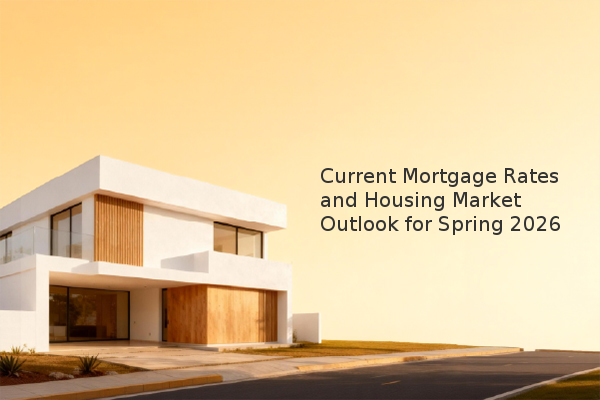
The U.S. housing market is experiencing a dynamic shift as Spring 2026 begins, characterized by rising mortgage rates, increasing home inventory, and steady prices. While the average 30-year fixed mortgage rate has climbed to 6.87%, a significant 23.8% annual increase in active listings offers more options for buyers. The key takeaway for participants is that market conditions present a critical trade-off: locking in a purchase now amid higher financing costs or waiting for potential rate cuts later in the year, while risking higher home prices and increased competition.
After a brief period of decline, mortgage rates have resumed an upward trajectory. The average rate for a 30-year fixed home loan, the most common financing product for U.S. homebuyers, recently increased from 6.74% to 6.87%. This movement is closely tied to the Federal Reserve's decision to hold its benchmark borrowing rate steady, coupled with recent inflation data that has exceeded expectations. It's important to understand that while the Fed's rate and mortgage rates are different, they generally move in the same direction. Based on our experience assessment, falling mortgage rates are contingent on a sustained decrease in inflation toward the Fed's 2% target, which has proven slower than anticipated. This has led some economists to project that interest rates may remain higher for slightly longer than previously forecast.
A standout trend for the 2026 spring market is the substantial growth in housing inventory. Active listings have surged by 23.8% compared to the same period last year, marking the 19th consecutive week of annual growth. This means today's home shoppers have a wider selection of properties to consider. This increase is driven by a 17.8% year-over-year jump in newly listed homes, the highest growth rate since 2021. However, perspective is crucial. Despite this encouraging growth, total housing inventory remains nearly 40% below typical pre-pandemic levels observed from 2017 to 2019. The gap between current supply and demand continues to underpin market dynamics.
In response to buyer hesitancy spurred by higher financing costs, home price growth has stabilized. The median national list price has remained flat year-over-year, holding at a level around $415,500. To attract buyers in this environment, a growing share of sellers are implementing price reductions. The percentage of available listings with a price cut increased by 1.4% in February compared to the previous year, a trend that has continued into March. This indicates that while prices are not falling dramatically, sellers are adjusting their strategies to make their listings more competitive, providing opportunities for diligent buyers to negotiate.
The interplay between rates, inventory, and prices creates a complex landscape for Spring 2026. Buyers face a calculated decision: act now with more choices but higher borrowing costs, or adopt a "wait and see" approach for potential rate cuts later in the year. The risk in waiting is that listing prices typically peak during the summer months, potentially offsetting any savings from a lower mortgage rate. Furthermore, homes are selling faster, spending two fewer days on the market than a year ago, indicating that demand remains robust. For sellers, the environment is favorable for attracting buyers with well-priced, fresh listings. Both progress on inflation and a continued boost in home supply are needed for the market to return to greater balance and affordability.
For prospective homebuyers, the practical advice is to get pre-approved to understand your precise budget and be prepared to move quickly when you find a suitable property. Sellers can benefit from pricing their homes competitively from the outset to stand out in a growing field of new listings. The trajectory of the market will remain highly dependent on incoming economic data, particularly regarding inflation and employment.