Browse

Log in / Register
 Share
Share
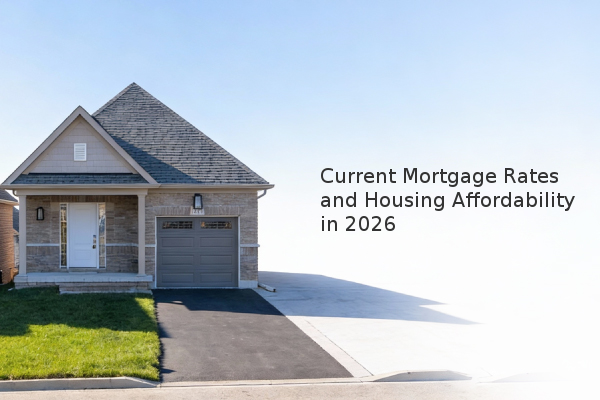
As of 2026, while the average 30-year fixed mortgage rate has seen a noticeable decline from previous peaks, housing affordability remains a significant challenge for American homebuyers. Current rates are primarily influenced by Federal Reserve policy and key economic indicators like inflation and employment data. For today's prospective buyer, understanding this dynamic is crucial for making informed financial decisions. The core insight is that even a modest drop in rates does not automatically guarantee improved affordability, as home prices and broader economic factors play an equally important role.
Based on our experience assessment, the trajectory of mortgage rates in 2026 continues to follow broader economic trends. The average rate for a 30-year fixed-rate mortgage, a home loan with a consistent interest rate and payment for the entire 30-year term, has stabilized after a period of volatility. This rate is closely tied to the 10-year U.S. Treasury yield. When economic data suggests inflation is cooling, as it has in recent months, downward pressure is often placed on long-term borrowing costs, which can lead to more favorable mortgage rates. It’s important for buyers to monitor these trends, as a difference of even half a percentage point can significantly impact your monthly payment.
The primary driver of the current rate environment is the monetary policy set by the Federal Reserve. While the Fed does not directly set mortgage rates, its actions on the federal funds rate—the rate at which banks lend to each other overnight—influence the entire economy. When the Fed raises this rate to combat inflation, it indirectly pushes up the cost of borrowing for various loans. However, long-term fixed mortgage rates are more sensitive to market expectations about future inflation and economic growth. Other critical factors include the strength of the job market and overall economic resilience. Current data on employment and consumer prices are key indicators to watch for predicting where rates might head next.
Despite the recent stabilization of rates, the overall cost of purchasing a home remains high. Affordability is a measure of the relationship between home prices, mortgage rates, and household income. Although monthly payments for a median-priced home may be slightly lower than during the peak of the market, the substantial increase in home prices over the past few years has offset much of the benefit from lower rates. This creates a particular hurdle for first-time homebuyers who may struggle with accumulating a sufficient down payment. A thorough assessment of your debt-to-income ratio and budget is more critical than ever.
For those considering a purchase in 2026, a strategic approach is essential. First, get pre-approved for a mortgage to understand your precise budget and demonstrate to sellers that you are a serious buyer. Second, consider all loan options; for some buyers, an adjustable-rate mortgage (ARM)—a loan with an interest rate that can change after an initial fixed period—might be a suitable short-term solution, though it carries future payment uncertainty. Finally, exploring down payment assistance programs at the state or local level can provide a crucial financial bridge. Working with a reputable lender to explore a mortgage rate lock, which guarantees a specific interest rate for a set period, can also protect you from potential rate increases during the closing process.
In summary, the 2026 housing market presents a complex picture where lower mortgage rates are balanced against persistent affordability concerns. The most effective strategy involves careful financial planning, staying informed on economic trends, and exploring all available options with a qualified professional. Getting multiple loan estimates and focusing on the total long-term cost of the mortgage, not just the monthly payment, is the most reliable path to a sound investment.